Imagine opening a European map created more than 300 years ago.
You see China.
You see Russia.
You see India.
But then your eyes are drawn to a name stretching across an enormous portion of Asia:
GREAT TARTARY.
A vast territory covering millions of square miles.
A name that appeared on countless maps from the 16th through the 19th centuries.
And it raises a fascinating question:
If Tartary was merely a geographical label, why did it appear so prominently on so many maps for hundreds of years?

According to mainstream historians, “Tartary” was a broad term used by European cartographers to describe the immense and often poorly understood regions of Central Asia, Siberia, and parts of northern Asia inhabited by various nomadic peoples.
In this view, Tartary was not a nation.
Not an empire.
Simply a geographical designation used to identify lands beyond Europe’s detailed knowledge.
Yet for many researchers and history enthusiasts, the story does not end there.
They argue that something about the mystery still feels unresolved.
How could a name that once covered such a massive area of the world almost completely disappear from modern historical discussions?
This question has fueled one of the most controversial historical theories of the internet age.
The theory of Tartaria.

According to proponents, Great Tartary was not merely a place name but the remnant of a powerful civilization—or even a vast empire—that once stretched across much of Eurasia.
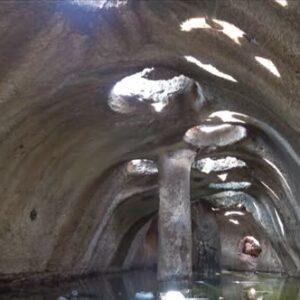
Some believe this lost civilization possessed remarkable engineering knowledge and left behind traces hidden within monumental structures scattered across the world.
Ancient fortresses.
Mysterious star-shaped forts.
Massive stone constructions.
Architectural achievements that continue to inspire speculation and debate.
Some even ask a more provocative question:
Could certain famous structures traditionally attributed to later civilizations have origins that we do not yet fully understand?
However, there is an important distinction between mystery and evidence.
To date, archaeologists have found no verified evidence for a unified global empire called Tartaria as described by modern conspiracy theories.
No confirmed capital city.
No unified government.
No imperial archives.
No royal tombs.
No archaeological record demonstrating the existence of a forgotten superpower spanning continents.
The historical consensus remains that “Tartary” was primarily a geographic term used by Europeans for regions inhabited by many different peoples and cultures.
Yet the fascination persists.
Because history is filled with surprises.
Entire cities have remained buried for thousands of years before being rediscovered.
Lost civilizations have emerged from deserts, jungles, and forgotten landscapes.
Ancient mysteries once dismissed as legends have occasionally revealed unexpected truths.
And that is why Great Tartary continues to capture the imagination of millions around the world.
Was Tartary simply a forgotten geographical name?

Or does it represent a chapter of history that has yet to be fully understood?
A lost civilization?
A misunderstood region?
Or one of the greatest historical mysteries created by old maps and modern curiosity?
For now, the answers remain elusive.
But every time someone unfolds an ancient map and sees the words “Great Tartary” stretching across Asia, the same question inevitably returns:
What really existed on the lands once known as Great Tartary?