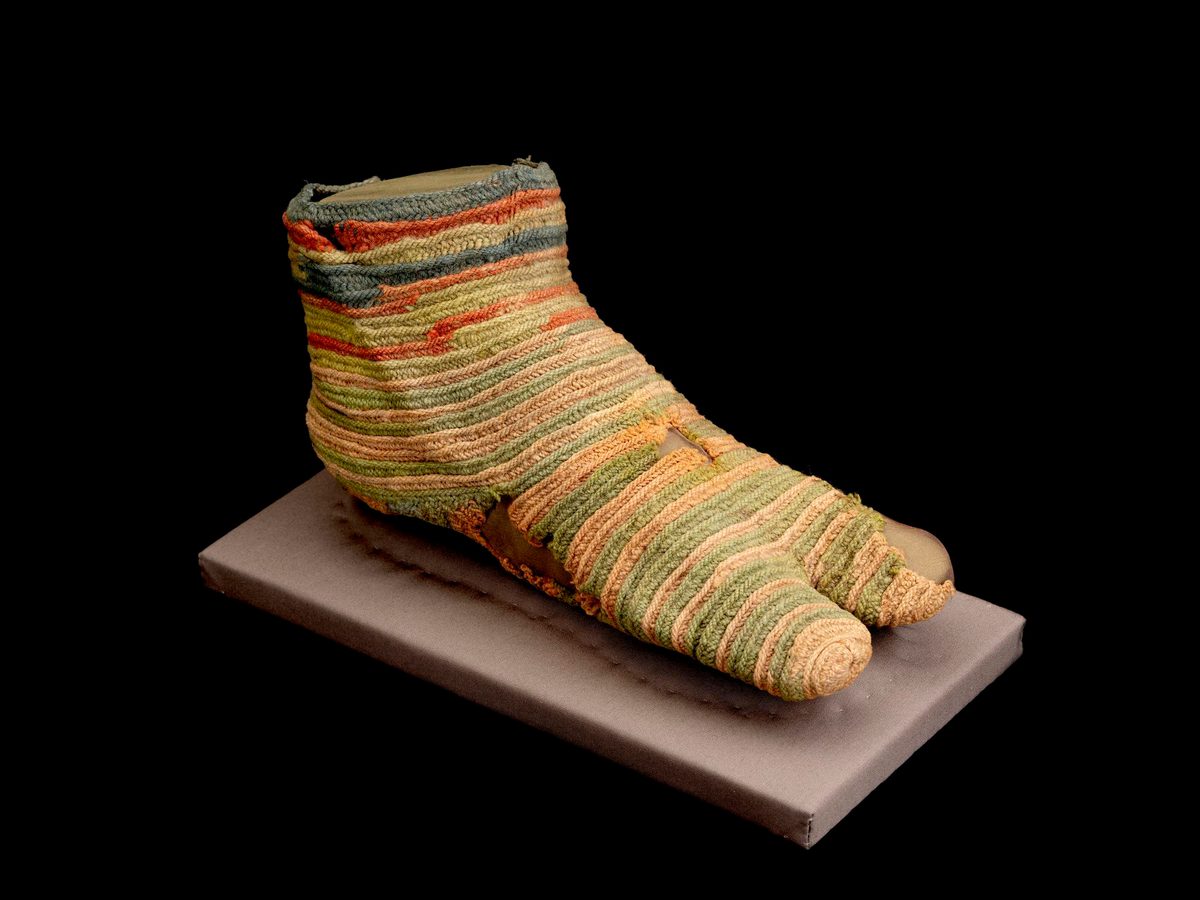
Most of the treasures that survive from the medieval world are the kind you’d expect: gold, stone, bone, the belongings of kings. This one is a sock.
A single, humble, knitted sock — reportedly around 900 years old, pulled from the dry earth of Egypt where, against all odds, soft things sometimes refuse to rot. And the closer you look at it, the stranger it gets. Because whoever made it seems to have solved a problem we still haven’t: what to do when only one part of something wears out.
A thousand years in the sand
Cloth is supposed to vanish. Wool unravels, cotton rots, dye fades — textiles are usually the first things time erases. Which is exactly why surviving examples like this feel almost impossible.
Egypt is the great exception. Its bone-dry sands and sealed burial sites have preserved fabrics that would have crumbled almost anywhere else, and museum collections around the world now hold a small, astonishing wardrobe of these ancient Egyptian socks and stockings. According to textile historians, they span centuries — and they reveal a craft far more sophisticated than the word “sock” suggests.
This particular example is said to date to the 12th century CE. And its real secret isn’t its age. It’s how it was built.
Knitted backwards — from the toe up
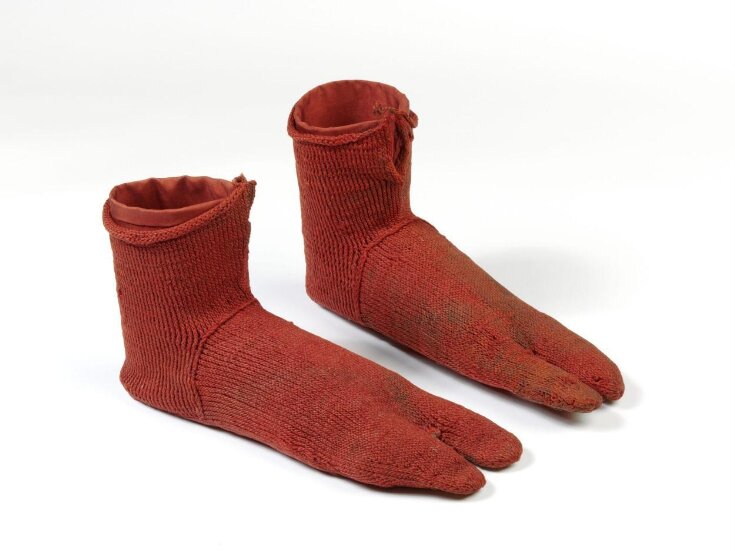
Here’s the first surprise: it appears to have been worked from the toe upward, climbing toward the leg — the opposite direction many people knit today.
The toe was shaped first, reportedly formed by scattered increases that fan the stitches outward into a neat little cone. From there the foot grew, then the ankle, then the leg — a tube of looped thread rising stitch by stitch. It’s patient, deliberate work, the kind that turns hours into a single wearable object.
But the maker left something unfinished on purpose. And that’s where the genius hides.
The genius hiding in the heel
Think about your own socks. Where do they die? Almost always the same two places — the heel and the toe, the points that grind against shoe and ground with every step.
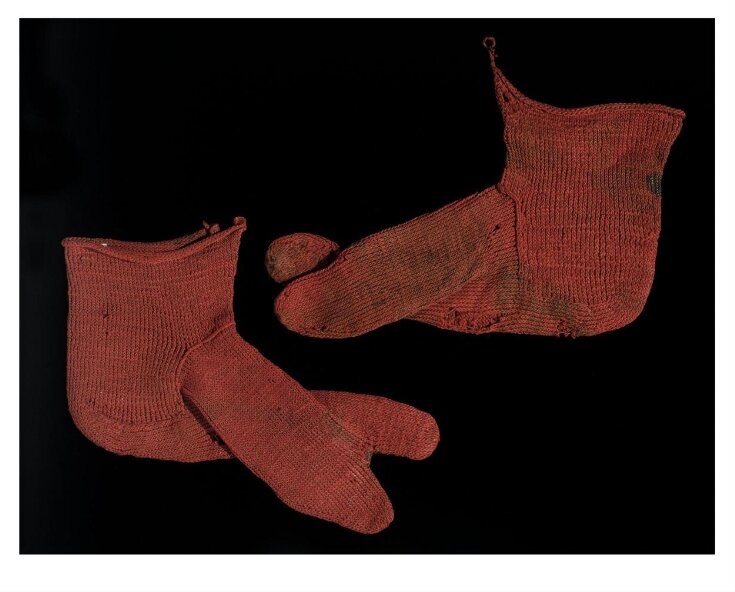
Whoever made this sock knew that too. So instead of knitting the heel as one seamless piece of the whole, they reportedly left a deliberate gap during the leg knitting — a ring of open loops, waiting. The heel was then made separately at the end and attached into those waiting loops.
**Nine centuries before “sustainable fashion” became a hashtag, someone in Egypt simply refused to let a worn heel kill a good sock.**
Because a heel built into a gap is a heel you can remove. When it wore through — as heels always do — it could, in theory, be unpicked and a fresh one looped back into place. No new sock. No wasted thread. Just a repair, and back onto the foot it went.
Repair, not replace
Sit with how quietly radical that is.
We live in an age of the disposable — buy it, wear it, bin it, buy it again. A small hole in the heel and the whole thing goes in the trash. Yet here, allegedly, is a person from the 1100s treating a single sock as something worth maintaining for years: modular, fixable, designed from the very first stitch with its own eventual repair in mind.
It’s the kind of thinking we now slap expensive words on — “circular design,” “repairability,” “sustainable craft.” They seem to have just called it common sense.
That contrast — ancient hands looking wiser than modern ones — is exactly what stops people mid-scroll. It feels less like a history lesson and more like a quiet challenge.
Knitting… or something older?
Now for the part experts still tangle over.
We casually call these things “knitted,” but the technique may not always be knitting as we know it. Many early Egyptian socks were reportedly made using nålbinding — a single-needle looping method, closer to sewing than to two-needle knitting, that can look almost identical to the real thing to an untrained eye. Telling the two apart on a fragile, faded artifact can be genuinely difficult, and scholars don’t always agree.
So how skilled were these makers, really — and how early did true knitting reach the workshops of medieval Egypt? On that, no one can say for absolute certainty. The thread, in more ways than one, keeps its secrets.

Why a humble sock still matters
It’s easy to gush over pyramids and gold death masks. It’s harder — and maybe more honest — to be moved by a sock.
Because this is the history most of us never get to see: not pharaohs, but the ordinary person who pulled this onto a cold foot, noticed the heel was going, and fixed it rather than tossing it. The grand monuments tell us what ancient rulers wanted us to remember. A mended sock tells us how people actually lived.
And it leaves us with an uncomfortable little question, looped right into the wool:
If someone 900 years ago could design a sock smart enough to repair, why did we ever decide it was easier to just throw ours away?