What if ancient myths were inspired by real places hidden among the mountains of the Andes? High above the historic heart of Cusco lies a site that has sparked fascination among travelers, historians, and lovers of ancient mysteries alike.

Known as Apukuna Tianan, or ‘the abode of the gods,’ this remarkable location invites a question that continues to captivate visitors: why have images of powerful beings, sacred animals, and legendary figures been carved into the landscape of one of the world’s most historically significant regions?

Where Myth Meets History
Apukuna Tianan is located in the Poroy district of the Cusco region in Peru, an area deeply connected to the legacy of the Inca civilization. The name comes from the Quechua language and translates as ‘the abode of the gods.’

The surrounding region is already famous for its extraordinary archaeological heritage. Cusco served as the capital of the Inca Empire and remains one of South America’s most important cultural centers.
Against this backdrop, Apukuna Tianan stands out as a place where art, mythology, and cultural memory appear to merge.
The Landscape That Tells Stories
Monumental Figures in Stone
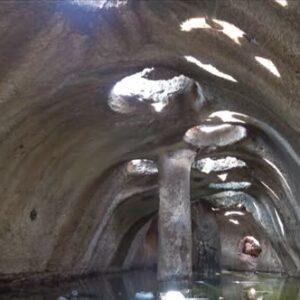
Visitors are often struck by the enormous sculptures carved directly into the rock formations. These figures depict beings and symbols connected to Andean traditions and indigenous beliefs.
At first glance, some observers assume they are ancient monuments. But the story is more complex than that.
Not an Ancient Ruin, Yet Deeply Connected to Ancient Traditions
Archaeologists and historians recognize that the sculptures themselves are modern artistic creations inspired by Inca and pre-Columbian mythology rather than surviving monuments from the Inca period.
This distinction is important. The site is not presented by scholars as a newly discovered ancient city or a lost archaeological settlement. Instead, it serves as a visual tribute to the spiritual world that shaped Andean civilization.
Yet that only raises another intriguing question: what do these carvings reveal about the beliefs that once guided one of history’s most remarkable empires?
What Archaeologists Know

Researchers have long studied the spiritual traditions of the Andes, where mountains, rivers, celestial bodies, and natural forces were often regarded as sacred.
The word ‘Apu’ refers to a powerful mountain spirit in Andean cosmology. These entities were believed to watch over communities and influence the natural world.
The imagery represented at Apukuna Tianan draws inspiration from these longstanding traditions, helping visitors visualize concepts that once existed primarily in oral histories, mythology, and historical accounts.
- Sacred mountain spirits known as Apus
- Animals with symbolic significance
- Figures connected to Andean legends
- Elements of Inca cosmology and spirituality
These themes offer valuable insight into how ancient Andean peoples understood their place within the universe.
The Questions That Continue to Fascinate Visitors
Why Do Ancient Beliefs Remain So Powerful?
One mystery surrounding places like Apukuna Tianan is not archaeological but cultural.
How have stories that originated centuries ago continued to resonate across generations?
Many of the legends associated with the Andes survived conquest, political change, and modernization. Their endurance suggests that these narratives fulfilled an important role beyond simple storytelling.
Could Legends Preserve Historical Memories?
Some researchers propose that myths can sometimes preserve fragments of historical events, environmental changes, or social transformations.
This does not mean every legend describes a literal occurrence. Rather, stories may contain symbolic memories of real experiences that communities considered important enough to pass down through time.
Determining where symbolism ends and historical memory begins remains a challenging task.
Competing Interpretations

Mainstream Historical View
The widely accepted interpretation is that Apukuna Tianan is a modern cultural and artistic project inspired by ancient Andean beliefs.
Under this view, its value lies in preserving and celebrating indigenous heritage rather than serving as direct archaeological evidence of a lost civilization.
Cultural Interpretation
Others see the site as a bridge between past and present.
Even though the carvings are modern, the stories they depict originate from traditions that have existed for centuries. In this sense, the site functions as a living expression of historical memory.
Alternative Speculations
Some visitors occasionally speculate about forgotten knowledge, hidden meanings, or connections to ancient mysteries.
However, there is currently no archaeological evidence supporting claims that the sculptures themselves originate from an unknown ancient civilization or represent lost technology.
Such ideas remain speculative interpretations rather than established historical conclusions.
Why This Mystery Still Matters Today
Not all historical mysteries involve undiscovered cities or buried treasures.
Sometimes the greatest mystery is understanding how people from the distant past viewed the world around them.
Apukuna Tianan encourages modern audiences to explore questions that archaeologists, anthropologists, and historians continue to investigate:
- How did ancient societies explain natural phenomena?
- Why were certain mountains considered sacred?
- How were myths used to preserve cultural identity?
- What can traditional stories teach us about the past?
These questions remain relevant because they help reveal the human side of history.
Modern Discoveries and Ongoing Research
Advances in archaeology, remote sensing technology, and historical analysis continue to transform our understanding of the Andes.
New discoveries throughout Peru regularly reveal additional details about ancient settlements, trade networks, agricultural systems, and religious practices.
Each finding adds another piece to a puzzle that researchers have been assembling for generations.
And while Apukuna Tianan itself is not a newly uncovered archaeological site, it has helped spark renewed public interest in the traditions that inspired it.
That curiosity often leads visitors to explore the broader history of Cusco and the remarkable achievements of Andean civilizations.
Final Thoughts
Apukuna Tianan occupies a unique space between art, mythology, and cultural heritage. It is not a lost city hidden beneath the mountains, nor is it an unsolved archaeological enigma.
Yet its connection to ancient beliefs opens a window into a world where mountains possessed spirits, legends shaped identity, and the boundaries between history and mythology were often intertwined.
The carvings may be modern, but the stories behind them are far older.
And perhaps that is the most fascinating mystery of all: how ancient ideas continue to speak to people centuries after the civilizations that created them have faded into history.
What Readers Are Saying
- Michael Turner: “I knew very little about this place before reading. The connection between mythology and history was fascinating.”
- Emily Carter: “The article kept me curious all the way through. I especially enjoyed the discussion about Andean beliefs.”
- David Brooks: “It’s amazing how ancient stories continue to influence modern culture.”
- Sophia Reed: “I appreciate how the evidence and speculation were clearly separated.”
- James Wilson: “Now I want to visit Cusco and learn more about Inca traditions.”
- Olivia Grant: “A perfect mix of archaeology, mystery, and storytelling.”
- Daniel Harris: “The section about sacred mountains was especially interesting.”
- Rachel Moore: “One of the most balanced articles on ancient mysteries I’ve read recently.”
Frequently Asked Questions
Is Apukuna Tianan an ancient archaeological site?
No. The monumental carvings are modern artistic creations inspired by ancient Andean mythology and cultural traditions.
What does the name Apukuna Tianan mean?
In the Quechua language, it is commonly translated as ‘the abode of the gods.’
Is there a connection to the Inca civilization?
Yes. The themes and symbolism draw heavily from beliefs associated with the Inca world and broader Andean traditions.
Why is the site considered mysterious?
The mystery comes primarily from the ancient myths, spiritual beliefs, and cultural symbolism represented by the sculptures.
What do archaeologists think about the site?
Researchers generally view it as a modern cultural monument that helps interpret and celebrate indigenous heritage.
Can tourists visit Apukuna Tianan?
Yes. The site is accessible to visitors exploring the Cusco region and is often included in cultural and sightseeing itineraries.