![The medieval tombstone of a bride and groom murdered at their wedding along with all their guests. The scene depicted here is their wedding. 10th century AD, Noratus Cemetery, Armenia. [2972x3964] :](https://preview.redd.it/the-medieval-tombstone-of-a-bride-and-groom-murdered-at-v0-5leealsg35tf1.jpeg?width=640&crop=smart&auto=webp&s=5b8dca901b2d9fe7d118f4f446475189b84cc9fa "The Medieval Wedding Massacre Memorialized in Stone: Armenia’s Most Haunting Tombstone Mystery 11")
For centuries, visitors have paused before a remarkable carved stone in Armenia and asked the same unsettling question: what tragedy was so devastating that it had to be immortalized in stone?

The answer appears to tell the story of a wedding celebration that ended in bloodshed—a bride, a groom, and their guests reportedly killed on what should have been the happiest day of their lives. Yet the deeper archaeologists look, the more fascinating the mystery becomes.

A Stone That Tells a Tragic Story
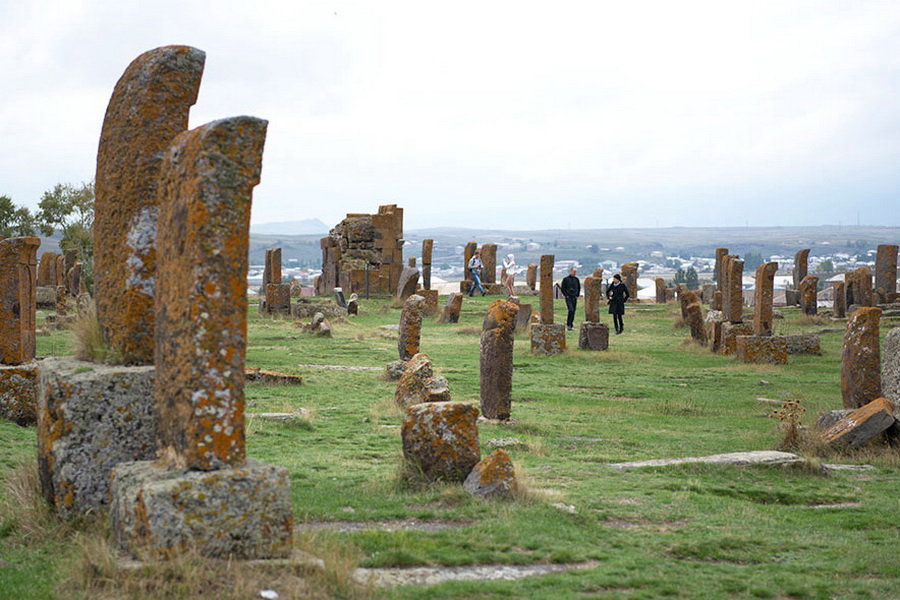
Located within the historic Noratus Cemetery in Armenia, one of the world’s largest surviving collections of medieval khachkars, or intricately carved cross-stones, stands a memorial unlike most others.
![The medieval tombstone of a bride and groom murdered at their wedding along with all their guests. The scene depicted here is their wedding. 10th century AD, Noratus Cemetery, Armenia. [2972x3964] :](https://preview.redd.it/the-medieval-tombstone-of-a-bride-and-groom-murdered-at-v0-5leealsg35tf1.jpeg?auto=webp&s=4bf9e7c595c5ce66cb1fffb6dcb05b81c2d3a62a "The Medieval Wedding Massacre Memorialized in Stone: Armenia’s Most Haunting Tombstone Mystery 14")
Its carvings depict what appears to be a wedding scene. Figures gather in celebration. A bride and groom seem to occupy a central place in the composition. At first glance, it looks like a joyful moment preserved for eternity.
But local tradition tells a far darker story.
According to folklore associated with the monument, invaders attacked during a wedding celebration, killing the newlyweds along with many of their guests. The stone was supposedly created to commemorate the victims and preserve their memory for future generations.
Yet that is only part of the story.
The Historical Background Behind Noratus Cemetery
Noratus Cemetery is one of Armenia’s most significant medieval archaeological sites. The cemetery contains hundreds of carved stones dating from different periods, many featuring detailed scenes from daily life, religious symbolism, and important local events.
These monuments provide valuable insight into medieval Armenian society.
Unlike many funerary monuments that focus solely on religious imagery, some Noratus stones depict hunting scenes, feasts, musicians, and community gatherings. This artistic tradition gives researchers rare glimpses into the lives of ordinary people centuries ago.
The wedding stone stands out because it appears to combine celebration with remembrance.
What Archaeologists Know
The Evidence Preserved in Stone
Archaeologists can directly study the carvings themselves, their artistic style, construction techniques, and historical context.
Several facts are generally accepted:
- The monument is medieval in origin.
- The carvings depict a social gathering interpreted by many as a wedding feast.
- The stone belongs to a broader tradition of Armenian memorial art.
- Local oral traditions have preserved stories associated with the monument for generations.
However, determining exactly what historical event inspired the carving is far more difficult.
The Challenge of Interpretation
Medieval memorial stones rarely function like modern historical records.
Images often contain symbolic meanings that can be difficult to decode centuries later. A scene that appears straightforward to modern observers may have carried religious, cultural, or commemorative meanings that are no longer fully understood.
And that is where the mystery deepens.
The Questions Historians Still Can’t Fully Answer
Did the Massacre Really Occur?
The most widely repeated explanation comes from local tradition. According to this account, attackers descended upon a wedding celebration and slaughtered those attending.
Such attacks were not unheard of during periods of regional conflict in medieval Armenia.
Yet historians must distinguish between documented events and stories preserved through oral tradition.
No surviving contemporary written record has conclusively verified every detail of the alleged massacre.
Could the Scene Be Symbolic?
Some researchers suggest the carving may not depict a single historical event.
Instead, it could symbolize themes of life, family, community, and mortality.
In medieval art, celebrations often carried deeper spiritual meanings. A wedding scene could represent more than a literal ceremony.
If so, the monument’s true message may be more complex than the popular legend suggests.
Evidence Supporting Different Theories
The Historical Event Theory
Supporters of this interpretation point to:
- Long-standing local traditions.
- The apparent wedding imagery.
- The region’s history of warfare and invasions.
- The commemorative nature of medieval memorial stones.
To many visitors, the story feels plausible.
But historians require more than plausibility.
The Symbolic Memorial Theory
Others argue that:
- Medieval carvings often contain symbolic imagery.
- The scene may represent community life rather than a specific event.
- Oral traditions can evolve significantly over centuries.
- Direct documentary evidence remains limited.
This interpretation remains cautious but cannot fully explain why the wedding story became so deeply attached to the monument.
And so the debate continues.
Why This Mystery Still Matters Today
At first glance, the story may seem like a local legend from a distant century.
Yet it touches on something universal.
The monument preserves human memory. Whether it commemorates a documented massacre, a symbolic message, or a blend of history and folklore, it reminds us that medieval communities sought ways to ensure important stories would not be forgotten.
Stone can outlast generations.
Sometimes it outlasts certainty itself.
Modern Discoveries and Ongoing Research
Advances in archaeology continue to improve our understanding of medieval Armenian monuments.
Researchers use digital documentation, high-resolution imaging, comparative iconographic studies, and historical analysis to examine sites like Noratus in greater detail than ever before.
Each new study helps scholars better understand the artistic traditions that produced these remarkable carvings.
But despite modern technology, some questions remain unanswered.
The exact story behind the wedding stone may never be fully known.
And perhaps that uncertainty is part of its enduring power.
Final Thoughts
The famous wedding monument of Noratus occupies a fascinating space between archaeology, history, and folklore.
Established evidence confirms the existence of a medieval memorial depicting a celebratory gathering. Local tradition preserves the haunting account of a bride, groom, and guests murdered during their wedding festivities. Historians continue to evaluate how much of that story reflects a specific event and how much may have evolved through centuries of retelling.
What remains undeniable is the emotional impact of the monument itself.
A joyful celebration frozen in stone.
A tragedy remembered across generations.
And one medieval mystery that still invites visitors to wonder what really happened on that unforgettable day.
What Readers Are Saying
- Michael Turner: “I expected a simple history lesson, but this mystery kept me reading until the very end.”
- Emily Carter: “It’s amazing how a single stone can preserve so many unanswered questions.”
- David Brooks: “The balance between archaeology and folklore made this especially fascinating.”
- Sarah Mitchell: “Now I want to learn more about medieval Armenia and its monuments.”
- James Wilson: “The uncertainty is what makes this story unforgettable.”
- Rachel Evans: “I had never heard of Noratus before. What an incredible place.”
- Andrew Foster: “A great reminder that history still contains mysteries waiting to be understood.”
Frequently Asked Questions
Is there evidence that the wedding massacre really happened?
The monument exists, and local traditions describe such an event, but historians have not conclusively verified every detail through surviving contemporary records.
What is Noratus Cemetery known for?
Noratus is famous for its large collection of medieval Armenian khachkars, intricately carved memorial stones that preserve religious and cultural history.
What do archaeologists believe today?
Researchers agree the monument is medieval and depicts an important social scene, but interpretations differ regarding its precise meaning and historical context.
Why is the mystery still unsolved?
Limited written documentation and the symbolic nature of medieval art make definitive conclusions difficult.
Has modern technology improved our understanding of the site?
Yes. Digital imaging, archaeological surveys, and comparative studies continue to provide new insights into the cemetery and its monuments.
Can visitors see the monument today?
Yes. Noratus Cemetery remains a significant cultural and historical destination in Armenia and attracts visitors interested in medieval history and archaeology.