High within the mist-covered landscapes of British Columbia, stories continue circulating about a massive footprint-shaped formation embedded in ancient rock.
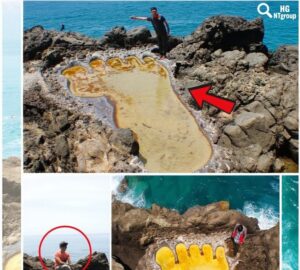
The unusual shape, reportedly measuring more than a meter in length, has become the center of speculation involving giants, mythological beings, and forgotten legends connected to the surrounding wilderness.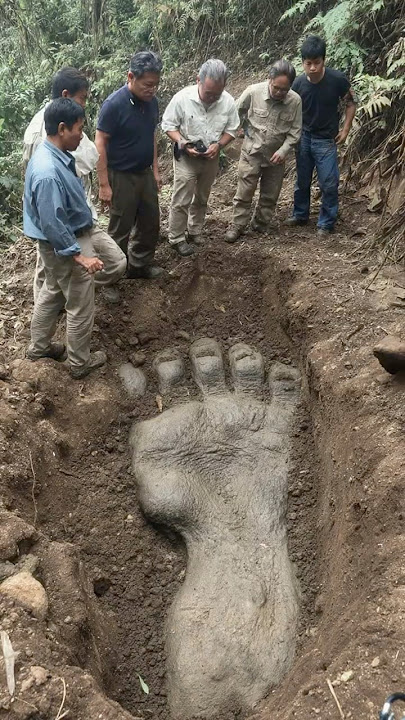
According to local rumors and online discussions, the formation resembles an enormous human-like footprint pressed deep into stone, as though something colossal once stepped across the mountainside long ago.
Photographs of the site have fueled theories ranging from prehistoric giants to supernatural visitors tied to ancient folklore.
Some interpretations connect the mark to regional Indigenous legends describing powerful sky-walkers, giant beings, or spiritual entities associated with the natural world.
Others compare the formation to mythological travelers from ancient epics, including figures such as Hanuman, whose stories often involve impossible journeys and superhuman strength.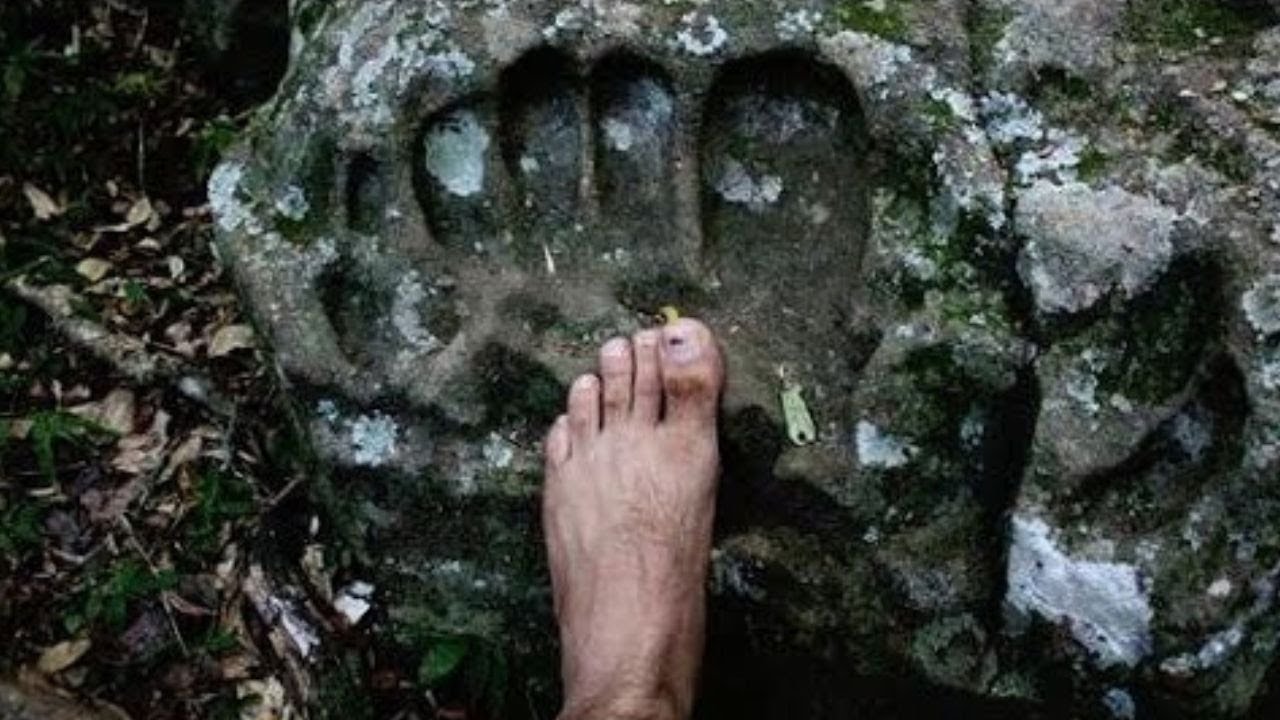
However, geologists and researchers emphasize that natural processes can produce remarkably familiar shapes within rock formations over long periods of time.
Erosion, fracturing, sediment compression, weathering, and water movement can combine to create patterns that strongly resemble footprints or other recognizable forms.
Scientists note that humans are naturally inclined to identify familiar shapes in random patterns — a psychological effect known as pareidolia.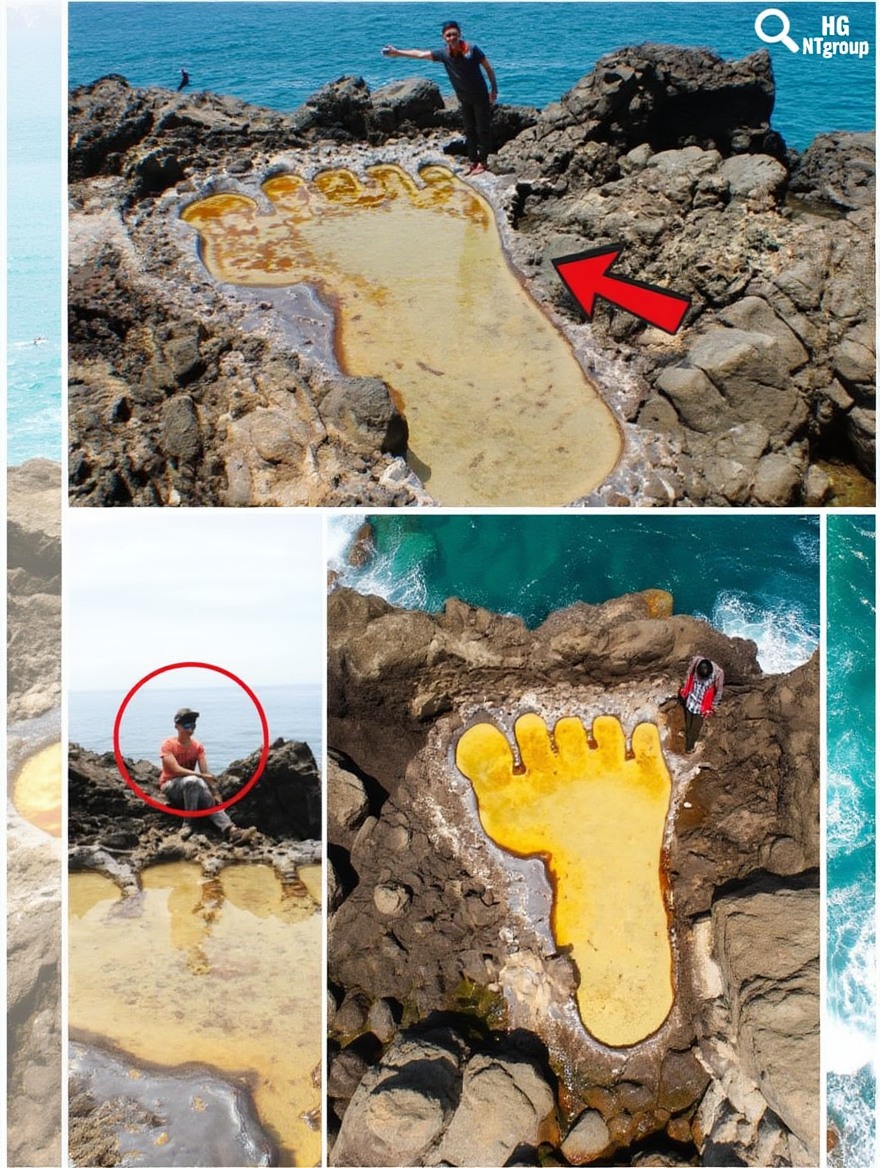
This tendency helps explain why unusual rock formations around the world are frequently interpreted as faces, animals, or giant footprints.
At present, there is no scientific evidence confirming that the formation was created by ancient giants, mythological beings, or unknown creatures.
No verified archaeological findings or geological studies support claims of giant humanoids once inhabiting the region.
Still, formations like this continue capturing public imagination because they exist at the intersection of landscape and mythology.
When nature creates something visually striking, human storytelling often transforms it into legend over generations.
Throughout history, mountains, caves, forests, and unusual geological formations have inspired myths designed to explain the unknown or preserve cultural memory tied to specific places.
Whether viewed as natural geology or symbolic folklore,
the “Titan’s Mark” remains a reminder that some landscapes do more than shape the Earth —
they shape the stories people tell about it.