Few historical objects can tell a story as powerfully as a single piece of clothing. Preserved for more than two centuries, one naval uniform still bears the physical evidence of a moment that changed the course of history.

At first glance, it appears to be an ordinary military coat. But a closer look reveals a small hole in the left shoulder—and behind that tiny tear lies one of the most dramatic episodes in naval history.
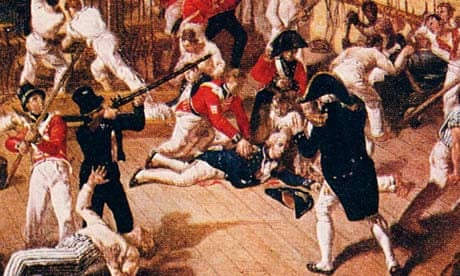
The Artifact That Captured a Historic Moment
The coat was worn by Admiral Horatio Nelson during the Battle of Trafalgar on October 21, 1805, one of the most significant naval engagements ever fought.

The battle took place off the coast of Spain and saw the British fleet confront the combined naval forces of France and Spain. The victory secured British naval dominance for generations, but it came at a tremendous cost.
Nelson, Britain’s most celebrated naval commander, was fatally wounded during the battle.
Today, the very coat he wore survives as a remarkable historical artifact.
Evidence Preserved in Fabric
The Bullet Hole That Changed History
The most striking feature of the coat is a visible hole in the left shoulder.
Historians identify this damage as the point where a bullet fired by a French sharpshooter struck Nelson aboard HMS Victory. The projectile entered through his shoulder and caused injuries that ultimately proved fatal.
The damage remains preserved, providing a direct physical connection to the events of that day.
Unlike paintings or written accounts, the coat offers tangible evidence of the battle’s human cost.
A Small Detail With a Larger Story
Another intriguing feature often overlooked by visitors is a small loop attached to the right sleeve.
This detail reflects an earlier chapter in Nelson’s military career. He had previously lost his right arm in combat and required modifications to his uniform. The loop allowed the empty sleeve to be secured neatly to a lapel button.
It is a subtle reminder of the injuries he endured long before Trafalgar.
Yet it also symbolizes the determination that made him one of history’s most famous naval leaders.
What Historians Know About the Final Hours
Historical records provide a detailed account of Nelson’s final moments.
During the battle, he remained visible on deck despite the dangers. Some historians believe his distinctive uniform and numerous decorations made him an obvious target for enemy marksmen.
When the fatal shot struck, Nelson was carried below deck.
There, as the battle continued overhead, he received reports about the progress of the engagement and learned that victory was within reach.
His death shortly after the battle transformed him into a national hero.
The Questions Historians Still Discuss
Was Nelson Intentionally Targeted?
One enduring question concerns whether the French sharpshooter specifically recognized Nelson.
Mainstream historians generally agree that his rank and highly decorated appearance increased the likelihood that he attracted enemy attention.
However, determining the exact intentions of the shooter remains impossible.
The surviving evidence supports several interpretations, but no definitive answer exists.
Could He Have Been Saved?
Another topic frequently discussed involves medical treatment.
Modern medicine might have improved his chances of survival, but early nineteenth-century battlefield care faced severe limitations.
Most experts believe the wound was catastrophic given the medical capabilities available at the time.
Yet the question continues to fascinate historians and medical researchers alike.
Why This Artifact Still Matters Today
Many museums display weapons, documents, and portraits. Yet personal items often create the strongest emotional connection with the past.
The coat bridges the gap between history and humanity.
Visitors are not simply viewing a uniform. They are seeing evidence of a real individual standing at the center of world-changing events.
That combination of personal tragedy and national triumph continues to captivate audiences more than 220 years later.
Modern Research and Preservation
The coat is preserved at the National Maritime Museum in London, where conservation specialists work to protect it for future generations.
Advances in textile preservation, imaging technology, and historical analysis allow researchers to study such artifacts with greater precision than ever before.
Each examination provides new insights into manufacturing techniques, military uniforms, and the conditions experienced by sailors during the Napoleonic era.
But despite all modern technology, the artifact’s greatest power remains its simplicity: a coat, a bullet hole, and a story that changed history.
What Readers Are Saying
- Michael Turner: “I knew about Trafalgar, but seeing how much history is preserved in a single coat is incredible.”
- Emily Carter: “The bullet hole makes the event feel surprisingly real and immediate.”
- David Brooks: “This article connected historical facts with human emotion perfectly.”
- Sarah Mitchell: “The detail about the sleeve loop was something I had never heard before.”
- James Walker: “It’s amazing that such a fragile artifact survived for more than two centuries.”
- Olivia Bennett: “I love how the story unfolded gradually instead of revealing everything at once.”
- Thomas Reed: “The coat tells more than many history books I’ve read.”
- Rachel Foster: “Now I want to visit the museum and see it in person.”
Frequently Asked Questions
Is the bullet hole in the coat authentic?
Historians and museum experts identify the hole as the entry point of the shot that fatally wounded Nelson during the Battle of Trafalgar.
Where is the coat displayed today?
The coat is preserved at the National Maritime Museum in London.
Why does the coat have a loop on the right sleeve?
The loop helped secure the empty sleeve after Nelson lost his right arm in an earlier military engagement.
Was Nelson wearing decorations during the battle?
Yes. Historical accounts indicate he wore several honors, which may have made him more noticeable to enemy marksmen.
Why is the Battle of Trafalgar considered important?
The battle secured British naval superiority and significantly influenced the balance of power during the Napoleonic Wars.
Can visitors still see the coat today?
Yes. The artifact remains one of the most famous items in the National Maritime Museum’s collection.
Final Thoughts
Some historical mysteries involve lost cities or forgotten civilizations. Others are preserved in surprisingly ordinary objects.
This naval coat survives not merely as clothing, but as silent testimony to courage, sacrifice, and one of the defining battles of the modern world.
More than two centuries later, the small hole in its shoulder continues to tell a story that historians—and visitors—have never stopped exploring.