Some ancient structures seem impossible to explain—not because they are enormous, but because they reveal a level of planning that feels surprisingly modern. Hidden in the highlands of Peru, an ancient water system carved directly into stone continues to raise fascinating questions about the engineering knowledge of the people who built it.

For more than two thousand years, this remarkable construction has endured wind, rain, and time itself. Yet one question still remains: how did an ancient society create such a sophisticated hydraulic system with the tools available to them?

A Forgotten Masterpiece in the Andes
Located near Cajamarca in northern Peru, the Cumbemayo aqueduct is one of the most impressive examples of ancient hydraulic engineering in South America. Stretching approximately 9 kilometers (5.6 miles), the channel winds through rugged terrain at high elevation, carefully directing water across the landscape.

What makes the site particularly striking is that much of the channel was carved directly into solid volcanic rock. Even today, visitors can follow sections of the aqueduct and observe the remarkable precision of its construction.
But that’s only part of the story.
What Archaeologists Know
Researchers generally date the aqueduct to more than 2,000 years ago, making it significantly older than the Inca civilization that later dominated much of the region.
The structure includes channels measuring roughly 35 to 50 centimeters in width and 30 to 65 centimeters in depth. Along one section extending approximately 850 meters, builders created sharp right-angled turns that appear surprisingly deliberate.
These features were not random decorative choices. Archaeologists believe they played an important role in controlling the movement of water.
Engineering with Purpose
The sharp angles likely helped reduce water velocity, minimizing erosion and allowing for a more controlled distribution system.
Modern hydraulic engineers recognize similar principles today. By slowing water flow, ancient builders may have protected the channel from long-term damage while improving reliability.
This suggests a sophisticated understanding of environmental conditions and water management.
Engineering Beyond Its Time?
The more closely researchers examine the aqueduct, the more impressive it becomes.
Creating a channel through hard rock requires planning, labor, and technical skill. Builders needed to understand gradients well enough to keep water moving efficiently without allowing it to become destructive.
A slight error could have rendered entire sections ineffective.
And yet the system functioned successfully across challenging terrain.
What happened next surprised many early investigators. The complexity of the design suggested that the society responsible possessed a far deeper knowledge of hydraulic engineering than previously assumed.
Theories About Its Original Purpose
Although archaeologists agree that the structure managed water, debate continues regarding its exact role within ancient society.
The Practical Water Management Theory
The mainstream interpretation is that the aqueduct was designed to transport and distribute water for agricultural and community needs.
Supporters point to:
- The channel’s careful gradient control.
- Its extensive length.
- Evidence of deliberate flow management.
- The importance of reliable water sources in highland environments.
For many researchers, this remains the most convincing explanation.
The Ceremonial Landscape Theory
Some scholars propose that the aqueduct may also have served ceremonial or spiritual purposes.
Water held profound symbolic importance in many ancient Andean cultures. Certain carved features and nearby archaeological remains have led researchers to consider whether ritual activities were connected to the site.
However, evidence for this interpretation remains limited, and it is generally viewed as complementary rather than a replacement for practical functions.
Alternative Hypotheses
Various alternative theories occasionally appear in popular discussions, suggesting hidden technologies or lost engineering secrets.
While these ideas can be intriguing, archaeologists emphasize that no credible evidence currently supports extraordinary explanations. The achievements of ancient builders can often be understood through human ingenuity, experience, and generations of accumulated knowledge.
Evidence Hidden in Stone
One of the most fascinating aspects of the site is how much information remains preserved in the rock itself.
Tool marks, channel geometry, and landscape integration provide clues about construction methods. Every carved section serves as a record left behind by the people who designed and maintained the system.
Yet gaps remain.
Researchers still do not know exactly how labor was organized, how long construction required, or how knowledge was transmitted between generations.
Those unanswered questions continue to fuel archaeological investigation.
Why This Mystery Still Matters Today
The significance of the aqueduct extends far beyond ancient history.
As modern societies face increasing concerns about water management and sustainability, ancient solutions are attracting renewed attention.
The builders of Cumbemayo worked with their environment rather than against it. Their approach demonstrates how careful observation and engineering can create systems capable of lasting for centuries.
In many ways, the site serves as a reminder that innovation is not exclusively a modern achievement.
Modern Discoveries and New Research
Advances in archaeological surveying, digital mapping, and environmental analysis are helping researchers understand the site in greater detail than ever before.
Modern studies continue to reveal how carefully the aqueduct was integrated into the surrounding landscape.
Each new discovery contributes another piece to the puzzle, but no single breakthrough has answered every question.
And that enduring uncertainty is part of what makes the site so captivating.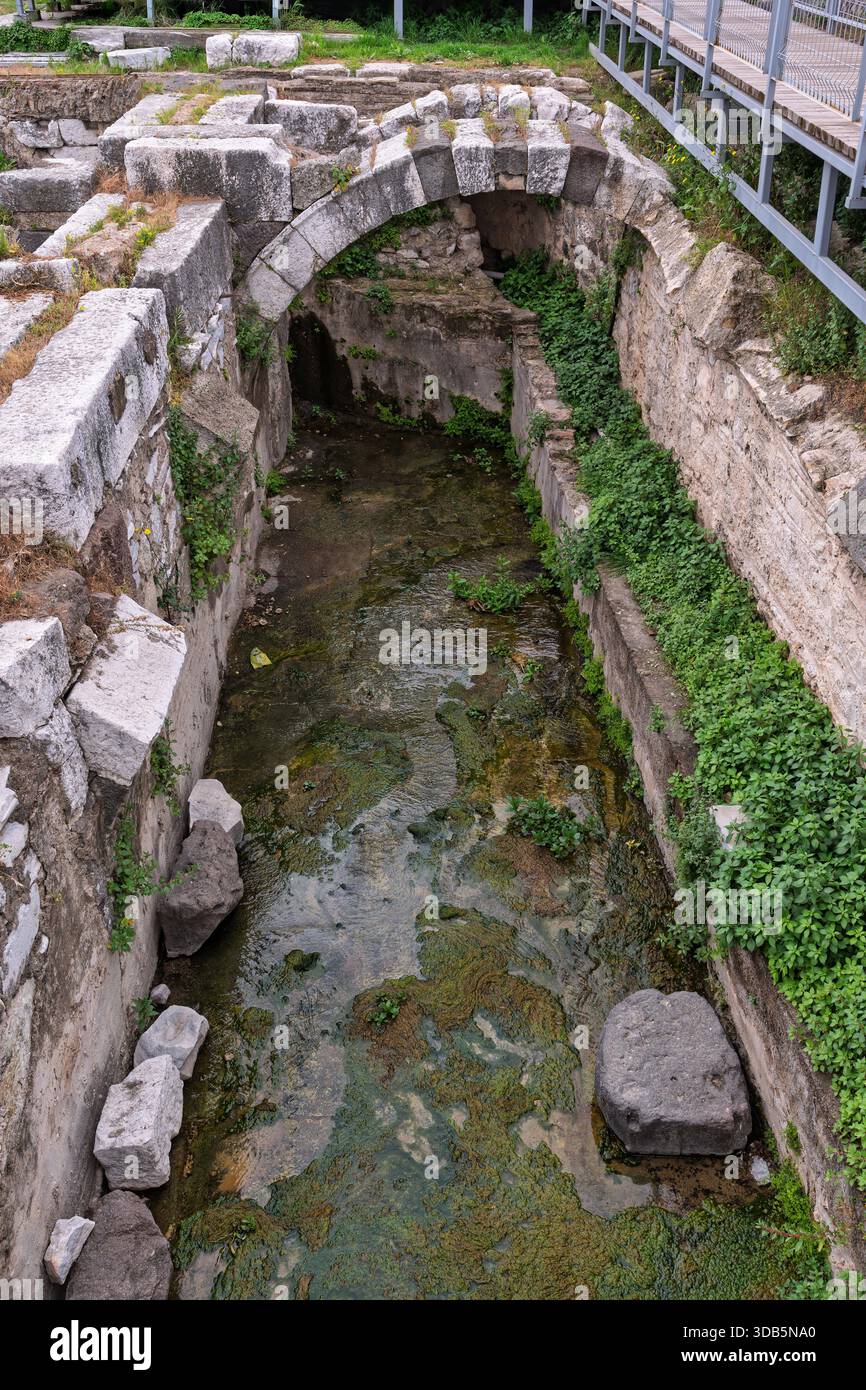
What Readers Are Saying
- Michael Turner: “I’ve read about ancient Peru before, but this made me appreciate how advanced these engineers really were.”
- Emily Carter: “The right-angled turns were fascinating. I had no idea ancient builders understood water control so well.”
- David Brooks: “This kept me hooked from beginning to end. History is far more mysterious than most people realize.”
- Sarah Mitchell: “The balance between evidence and mystery was excellent.”
- James Walker: “It’s amazing that a 2,000-year-old water system can still teach us lessons today.”
- Olivia Reed: “Now I want to learn more about ancient Andean civilizations.”
- Robert Hayes: “The engineering details were incredible without becoming too technical.”
- Linda Foster: “One of the most interesting archaeological stories I’ve read this year.”
Frequently Asked Questions
How old is the Cumbemayo aqueduct?
Most researchers believe it dates back more than 2,000 years, making it older than the Inca Empire.
Why are there sharp right-angle turns in the channel?
Many archaeologists believe these turns helped slow water flow, reducing erosion and improving long-term stability.
Was the aqueduct only used for agriculture?
Not necessarily. While water management was likely its primary purpose, some researchers suggest ceremonial functions may also have been involved.
What makes the site unique?
Its channels were carved directly into solid rock and demonstrate an impressive understanding of hydraulic engineering.
Can visitors see the aqueduct today?
Yes. The site remains a popular archaeological destination near Cajamarca, Peru.
Why is it still considered a mystery?
Although its engineering achievements are clear, many details about its builders, construction methods, and full cultural significance remain uncertain.
Final Thoughts
Ancient civilizations are often remembered for monuments, temples, and cities. Yet sometimes their most remarkable achievements are hidden in plain sight.
The Cumbemayo aqueduct stands as a powerful example of human ingenuity, demonstrating how ancient societies mastered complex environmental challenges long before modern technology existed.
We know a great deal about this extraordinary structure. And yet, as archaeologists continue their research, the stone channels of the Peruvian highlands still guard some of their secrets.
Perhaps that is what makes the story so compelling. The water’s path can be traced. The engineering can be studied. But the full story of the people behind it remains just beyond reach.