For nearly two thousand years, a warning has remained frozen in time at the entrance of a Roman home. Visitors approaching the doorway would have seen a striking image of a dog and a simple message that still feels surprisingly familiar today: ‘Beware of the dog.’

But this famous mosaic is more than an ancient warning sign. Hidden beneath layers of volcanic ash for centuries, it offers an extraordinary glimpse into daily life in one of history’s most fascinating cities.

A Doorway Frozen in Time
The famous ‘Cave canem’ mosaic was discovered in the House of the Tragic Poet, one of Pompeii’s most well-known residences. Located near the entrance, the artwork depicts a chained dog accompanied by the Latin inscription ‘Cave canem,’ meaning ‘Beware of the dog.’

At first glance, it may seem like a simple decoration. Yet archaeologists believe it served both practical and symbolic purposes, greeting visitors while also warning them to proceed carefully.
That combination of functionality and artistic expression reveals much about Roman domestic life.
The City Preserved by Disaster
To understand the significance of the mosaic, it helps to understand Pompeii itself.
In 79 CE, the eruption of Mount Vesuvius buried the thriving Roman city beneath volcanic ash and debris. Buildings, streets, artwork, and household objects were remarkably preserved, creating one of the most important archaeological sites ever discovered.
The ash acted almost like a protective seal, preserving countless details that would otherwise have disappeared forever.
Among those details was the famous dog mosaic.
What Archaeologists Know
The Purpose of the Mosaic
Most scholars agree that the artwork served as a warning to guests entering the home. Similar messages appeared elsewhere in the Roman world, suggesting that concerns about security and guard dogs were common.
However, the mosaic also reflected the homeowner’s status and taste. Roman houses often used elaborate floor decorations to impress visitors before they even stepped inside.
Artistry and Craftsmanship
The mosaic was created using thousands of carefully arranged tesserae, small pieces of stone and other materials. The level of detail demonstrates the skill of Roman artisans and the importance homeowners placed on visual presentation.
Even today, the dog’s alert posture creates a sense of movement and realism.
And that is where the story becomes even more intriguing.
The Questions Historians Still Discuss
While the inscription itself is straightforward, historians continue to debate certain aspects of its meaning.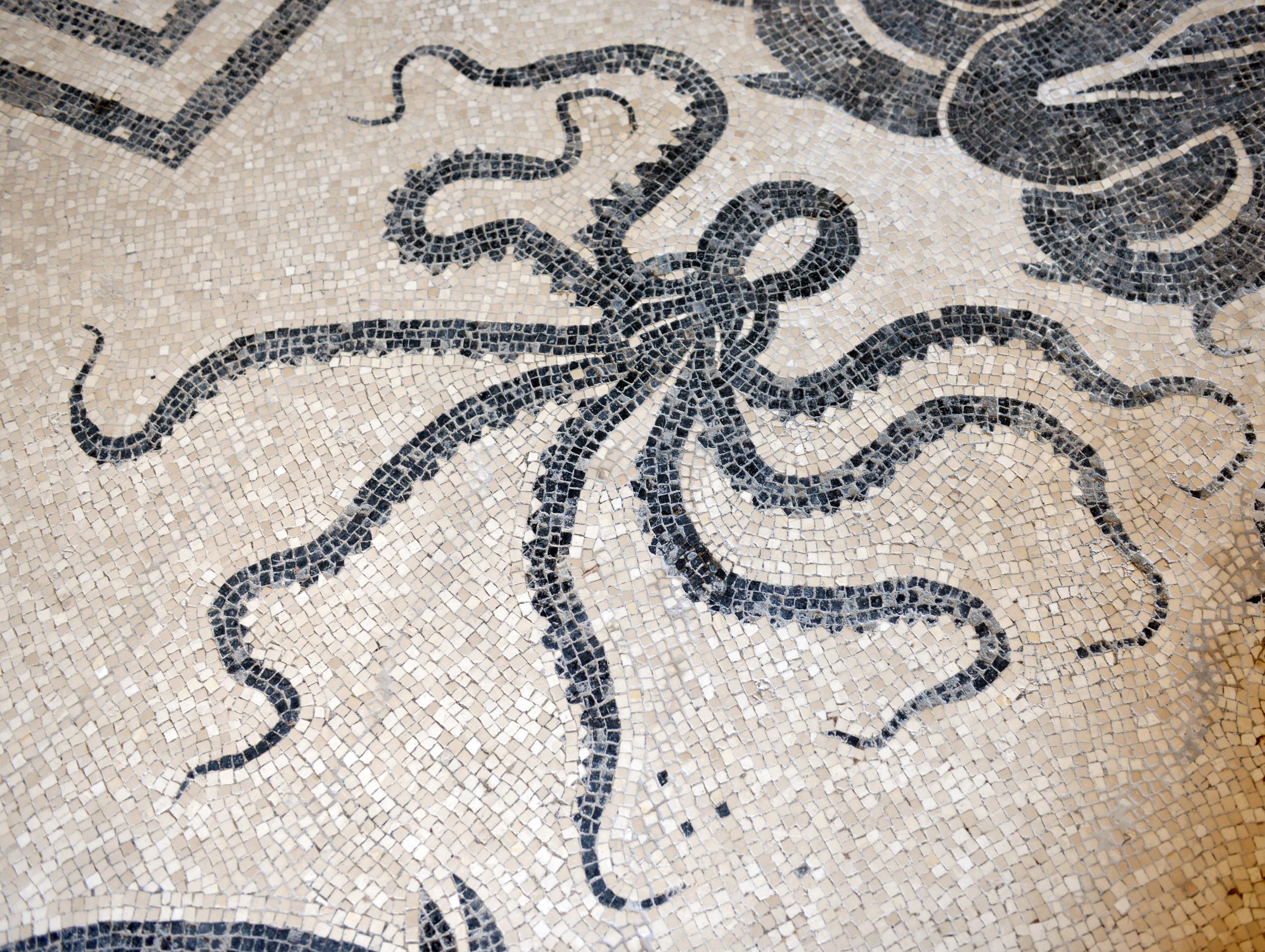
Was There Really a Guard Dog?
One interpretation suggests the warning was entirely literal. A real guard dog may have protected the property.
Another possibility is that the image functioned partly as a deterrent. Even if no dog was present, potential intruders might think twice before entering.
Both explanations remain plausible.
Symbolism Beyond Security?
Some researchers have proposed that dogs may also have held symbolic significance in Roman households.
In Roman culture, dogs could represent loyalty, vigilance, and protection. The mosaic may therefore have communicated broader ideas about the household and its values.
Yet definitive proof remains elusive.
Evidence Hidden in Plain Sight
What makes this discovery particularly fascinating is how ordinary it appears.
Grand temples and imperial monuments often dominate discussions of ancient Rome. But everyday objects sometimes tell us far more about how people actually lived.
- It reveals how Romans welcomed visitors.
- It demonstrates the use of visual communication.
- It highlights concerns about property protection.
- It showcases artistic traditions within private homes.
- It preserves a moment of daily life rarely captured in historical records.
In many ways, the mosaic feels surprisingly modern.
Why This Mystery Still Matters Today
The enduring appeal of the ‘Cave canem’ mosaic lies not in an unsolved enigma but in the questions it raises about ordinary people.
Who commissioned it?
Did children walk past it every day?
Did visitors smile when they saw the warning?
Those personal stories are largely lost to history, yet the mosaic provides a direct connection to the individuals who once called Pompeii home.
That human connection continues to captivate researchers and visitors alike.
Modern Discoveries and New Research
Advances in archaeology are helping scholars understand Pompeii with increasing precision.
Digital mapping, high-resolution imaging, and new excavation techniques have revealed details about buildings, social structures, and daily routines that earlier generations could only imagine.
The House of the Tragic Poet remains an important source of information for studying Roman domestic architecture.
Each new investigation helps place famous artifacts like the dog mosaic into a broader historical context.
And with ongoing research, new insights may still emerge.
Final Thoughts
The ‘Cave canem’ mosaic stands as one of Pompeii’s most recognizable treasures. Its message is simple, yet its historical significance runs far deeper than a warning sign.
Preserved by catastrophe and rediscovered centuries later, it offers a rare window into everyday Roman life. More importantly, it reminds us that behind every archaeological discovery were real people with homes, families, concerns, and personalities.
Nearly two millennia later, that ancient dog is still doing exactly what it was designed to do: capturing the attention of everyone who passes by.
What Readers Are Saying
- Michael Turner: “I knew about Pompeii, but I never realized a simple mosaic could reveal so much about daily Roman life.”
- Emily Carter: “The connection between archaeology and ordinary people made this especially fascinating.”
- David Brooks: “It’s amazing how a warning sign from ancient Rome still feels familiar today.”
- Sophia Reed: “The gradual storytelling kept me reading all the way to the end.”
- James Walker: “I love how the article separates facts from interpretation.”
- Olivia Bennett: “Pompeii never stops surprising me. Every discovery feels personal.”
- Ryan Mitchell: “The historical details were informative without feeling overwhelming.”
- Grace Foster: “Now I want to learn more about Roman homes and architecture.”
Frequently Asked Questions
What does ‘Cave canem’ mean?
The Latin phrase translates to ‘Beware of the dog’ and likely served as a warning to visitors entering the property.
Where was the mosaic discovered?
It was found at the entrance of the House of the Tragic Poet in Pompeii, one of the city’s most famous residences.
Did the house actually have a guard dog?
Archaeologists consider that a strong possibility, although direct evidence for a specific dog has not been confirmed.
Why is the mosaic important to archaeologists?
It provides insight into Roman daily life, home design, social customs, and artistic traditions.
Can visitors still see the mosaic today?
The original mosaic has been preserved, and visitors to Pompeii can learn about its history through displays and reproductions associated with the site.
Why is Pompeii so well preserved?
The volcanic ash from Mount Vesuvius rapidly covered the city, protecting buildings, artwork, and artifacts from many forms of deterioration.