Some archaeological discoveries challenge everything we think we know about the distant past. One remarkable site has done exactly that, and what researchers have uncovered beneath its ancient stones continues to raise fascinating questions that science is still working to answer.

For years, experts believed they had uncovered most of the story. Then new investigations revealed that what was visible above ground might represent only a fraction of a much larger and more complex landscape.

The Monument That Changed Archaeology
Located in southeastern Türkiye, Göbekli Tepe is widely regarded as one of the world’s oldest known monumental ceremonial sites. Dating back roughly 11,000 to 12,000 years, it predates Stonehenge and the Egyptian pyramids by thousands of years.

Its enormous T-shaped limestone pillars, many decorated with intricate carvings of animals, challenged the long-held belief that only settled farming societies could organize projects on such a massive scale.
A Discovery That Rewrote History
Before its excavation, historians generally believed agriculture came first, followed by permanent settlements and then large ceremonial monuments. Göbekli Tepe suggested the sequence may have been more complicated.
Instead, groups of hunter-gatherers may have gathered to build monumental structures long before cities or kingdoms appeared.
What Archaeologists Have Found Beneath the Surface
Excavations and advanced geophysical surveys revealed something unexpected.
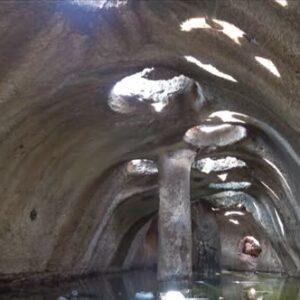
Researchers identified numerous buried circular and rectangular structures surrounding the excavated enclosures. Ground-penetrating techniques indicate that only a small portion of the site has been fully uncovered.
This means the visible monuments are likely part of a much larger ceremonial complex extending beneath the surrounding hill.
Hidden Architecture
Evidence suggests multiple construction phases spanning centuries. Some enclosures were intentionally buried after use, preserving their remarkable carvings in extraordinary condition.
- Massive limestone pillars carefully shaped by hand.
- Detailed carvings of foxes, snakes, birds, boars, and other animals.
- Stone benches and enclosed ceremonial spaces.
- Signs of deliberate backfilling rather than abandonment.
That final detail continues to intrigue archaeologists. Why would people invest enormous effort building these monuments only to bury them?
The Questions Researchers Are Still Trying to Answer
Why Was It Buried?
Mainstream archaeology considers the intentional burial one of the site’s most remarkable features. Rather than collapsing naturally, many structures appear to have been deliberately filled with soil, stone fragments, and debris.
The reason remains uncertain. Possible explanations include changing ceremonial traditions, symbolic closure of sacred spaces, or practical landscape management.
Who Built It?
Current evidence indicates communities of hunter-gatherers organized the construction. This challenges previous assumptions about the social capabilities of prehistoric populations.
Yet many details about their beliefs, leadership, and daily lives remain unknown.
Competing Theories
Mainstream Archaeological Interpretation
Most specialists interpret Göbekli Tepe as an important ceremonial or ritual center where regional communities gathered for social and religious activities.
The architecture, carvings, and repeated rebuilding support the idea of a location with deep cultural significance.
Alternative Hypotheses
Some alternative writers have proposed connections to forgotten advanced civilizations or lost prehistoric knowledge.
However, these ideas are speculative and are not supported by the current archaeological evidence. While they remain popular in documentaries and online discussions, researchers emphasize that no confirmed discoveries demonstrate the existence of an unknown advanced civilization at the site.
What the Evidence Actually Shows
Established archaeological evidence includes radiocarbon dating, extensive excavation records, tool marks on the limestone pillars, and carefully documented stratigraphy.
These findings strongly support the site’s extraordinary antiquity and the remarkable engineering abilities of prehistoric communities.
At the same time, many questions about symbolism, social organization, and the site’s complete layout remain open for future research.
Why This Mystery Still Matters Today
Göbekli Tepe has fundamentally changed how historians think about the origins of civilization.
Rather than viewing religion, cooperation, and monumental construction as products of advanced societies, researchers now consider the possibility that these activities helped shape civilization itself.
That shift represents one of archaeology’s most significant intellectual developments in recent decades.
Modern Discoveries and Continuing Research
New remote sensing technologies continue to reveal buried features without disturbing the site.
Ongoing excavations at nearby prehistoric locations are also helping researchers understand that Göbekli Tepe was likely part of a broader cultural landscape rather than an isolated monument.
Each new season of research answers some questions—but often creates even more.
And perhaps that is what makes this discovery so compelling.
Final Thoughts
Some mysteries disappear once enough evidence is collected. Others become even more fascinating as new discoveries emerge.
Göbekli Tepe belongs firmly in the second category. While archaeology has uncovered extraordinary facts about its age, construction, and cultural importance, the deeper meaning behind its monuments continues to inspire investigation.
What still lies beneath the hill may eventually reshape our understanding of humanity’s earliest chapters once again.
What Readers Are Saying
- Michael Turner: “I’ve read about this topic before, but this explained it in a way that kept me hooked from start to finish.”
- Emily Carter: “It’s incredible how many unanswered questions still exist in human history.”
- David Brooks: “Now I want to learn everything about ancient civilizations.”
- Sarah Mitchell: “The balance between evidence and mystery made this a fascinating read.”
- James Collins: “I had no idea only part of the site has been excavated. That’s amazing.”
- Olivia Harris: “The historical context really helped me understand why this discovery matters.”
Frequently Asked Questions
Is there evidence that Göbekli Tepe really existed as an ancient ceremonial site?
Yes. Extensive excavations, radiocarbon dating, and documented archaeological research confirm the site’s age and significance.
What do archaeologists believe today?
Most researchers interpret the site as a major ceremonial center built by prehistoric hunter-gatherer communities.
Has modern technology changed our understanding?
Yes. Geophysical surveys and remote sensing have revealed additional buried structures that may expand our understanding of the entire complex.
Why is the mystery still unsolved?
Although much has been discovered, researchers still do not know the precise purpose of many structures or why several were intentionally buried.
Can tourists visit the archaeological site?
Yes. Göbekli Tepe is open to visitors, with protective infrastructure allowing people to observe the excavated areas while preserving the site for future research.