What was happening in Egypt thousands of years before the first pharaoh ever ruled? Long before pyramids rose above the desert horizon, people were leaving behind mysterious images carved into stone—artworks that are now reshaping our understanding of Egypt’s distant past. And the deeper archaeologists look, the more surprising the story becomes.

A Forgotten Chapter Before Ancient Egypt
When most people think of ancient Egypt, they picture towering pyramids, elaborate temples, and powerful dynasties. Yet Egypt’s human story stretches back thousands of years before written history began.

During the closing stages of the last Ice Age, roughly 15,000 years ago, groups of hunter-gatherers lived in landscapes that looked very different from today’s arid deserts. Seasonal changes, shifting climates, and abundant wildlife supported communities that expressed themselves through remarkable rock art.

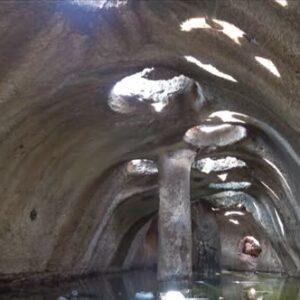
One of the most fascinating discoveries comes from Sinai’s so-called Cave of Darkness, where archaeologists documented approximately 350 petroglyphs carved directly into the rock walls.
The Cave That Preserved Ancient Stories
More Than Simple Drawings
The carvings include detailed representations of animals that once roamed the region, including camels and powerful wild cattle known as aurochs. These images offer valuable clues about the environment and the people who once inhabited it.
But that’s only part of the story.
Among the many engravings is one particularly intriguing figure—a headless female form whose proportions resemble the famous Paleolithic “Venus” figurines discovered across Europe.
The similarity immediately captured researchers’ attention, raising new questions about prehistoric artistic traditions.
What Archaeologists Know So Far
Based on archaeological analysis, the petroglyphs appear to date to the Late Paleolithic period, placing them thousands of years before Egypt’s dynastic civilization emerged.
The engravings were created by prehistoric hunter-gatherer communities rather than the builders of temples or pyramids. Their exact cultural identity remains uncertain because no written records survive from this era.
Researchers study the carvings using several methods, including:
- Comparisons with similar prehistoric rock art.
- Analysis of weathering and engraving techniques.
- Regional archaeological evidence.
- Environmental reconstruction of Ice Age landscapes.
Together, these approaches help place the artwork within a broader prehistoric context, although many details remain open to investigation.
The Headless Woman and an Unexpected Connection
Could Distant Cultures Have Shared Ideas?
The female figure has become one of the site’s most discussed discoveries because it resembles Paleolithic Venus figurines found throughout parts of Europe.
Mainstream archaeologists do not interpret this resemblance as proof of direct contact between distant populations. Instead, several explanations are considered possible.
- Independent artistic traditions may have developed similar symbolic representations.
- Shared human experiences may have inspired comparable imagery.
- Population movements over thousands of years could have contributed to broader cultural similarities.
No single explanation has been confirmed, making the figure one of the site’s enduring mysteries.
The Questions Researchers Are Still Trying to Answer
Every new discovery seems to answer one question while creating several more.
Why were these particular animals chosen?
Did the carvings mark sacred places, seasonal gatherings, or important hunting grounds?
Was the female figure symbolic, ceremonial, or simply artistic expression?
Without written language, archaeologists must carefully interpret the evidence while avoiding conclusions that go beyond what the discoveries can support.
Evidence Behind the Leading Interpretations
Established Archaeological Evidence
- The engravings are genuine prehistoric petroglyphs.
- The artwork predates dynastic Egypt by many millennia.
- The animal depictions reflect species known from prehistoric environments.
Mainstream Interpretation
Most researchers view the carvings as expressions of Late Paleolithic hunter-gatherer communities, offering insights into their environment, symbolism, and daily lives.
Alternative Hypotheses
Some researchers have suggested broader cultural connections with other prehistoric regions because of artistic similarities. However, these ideas remain hypotheses rather than established historical conclusions.
Legends and Speculation
Popular discussions occasionally link prehistoric discoveries to lost civilizations or forgotten advanced cultures. At present, there is no archaeological evidence supporting such claims in relation to these petroglyphs.
Why This Discovery Still Matters Today
These carvings remind us that Egypt’s history did not suddenly begin with kings and monuments.
Long before organized states emerged, prehistoric communities observed wildlife, created symbolic art, and left behind records of their world using stone instead of writing.
Each newly documented petroglyph expands our understanding of how early humans adapted, communicated, and expressed ideas during one of history’s most distant chapters.
Yet one question still remains: how many more prehistoric galleries are still hidden beneath the deserts of Sinai?
Modern Discoveries Continue to Expand the Story
Advances in archaeological documentation, digital imaging, and landscape analysis are helping researchers identify previously overlooked rock art sites across North Africa and the Middle East.
As fieldwork continues, discoveries like those in the Cave of Darkness demonstrate that even regions famous for their ancient civilizations still contain much older stories waiting to be uncovered.
What happens next may reshape our understanding of prehistoric Egypt even further.
Final Thoughts
The petroglyphs of Sinai’s Cave of Darkness offer a rare glimpse into a world that existed thousands of years before pharaohs, pyramids, and hieroglyphs.
Although many mysteries remain unsolved, the discovery highlights the remarkable creativity of prehistoric people and reminds us that the roots of human history often reach far deeper than we imagine.
Sometimes, the oldest stories are not written in books—but carved into stone, waiting patiently for someone to notice them.
What Readers Are Saying
- Michael Turner: “I’ve read about ancient Egypt for years, but this revealed a completely different side of its history.”
- Emily Carter: “The gradual explanation kept me curious all the way to the end.”
- David Brooks: “It’s amazing that discoveries this old are still changing what we know about humanity.”
- Sophia Reynolds: “The balance between evidence and mystery made this incredibly enjoyable to read.”
- James Walker: “Now I want to learn more about prehistoric rock art around the world.”
- Olivia Bennett: “The comparison with the Venus figurines was especially fascinating.”
Frequently Asked Questions
Is there evidence these petroglyphs are older than ancient Egyptian civilization?
Yes. Archaeologists attribute them to the Late Paleolithic period, thousands of years before Egypt’s dynastic era.
What animals appear in the carvings?
The engravings include camels, aurochs, and other wildlife that provide clues about the prehistoric environment.
Why is the headless female figure important?
Its resemblance to European Paleolithic Venus figurines has prompted discussions about symbolic traditions, although no direct cultural connection has been established.
Why is this mystery still unresolved?
Because no written records exist from the period, researchers must rely on archaeological evidence and careful interpretation.
Could future discoveries change current theories?
Absolutely. New excavations, improved dating techniques, and additional rock art discoveries may provide important evidence that refines today’s understanding.