What if one of the world’s most famous religious landmarks still concealed secrets beneath its foundations? For years, stories about hidden passages, sealed doors, and forgotten chambers beneath St. Peter’s Basilica have circulated online. Yet as intriguing as these claims may be, the evidence tells a far more complex—and fascinating—story.

The Origins of a Modern Mystery
Few places inspire as much curiosity as St. Peter’s Basilica in Vatican City. Built over centuries above layers of ancient Roman history, the basilica stands on ground that has undergone countless phases of construction, excavation, and restoration.
Because of this remarkable history, rumors regularly emerge suggesting that newly discovered chambers or hidden corridors could transform our understanding of the past.

One recent viral claim alleges that Pope Leo XIV confirmed the existence of a hidden door leading to an unknown chamber beneath the basilica. Despite widespread sharing online, no verified archaeological report or official Vatican announcement currently supports this claim.
What Archaeologists Actually Know
Centuries of Layers Beneath the Basilica
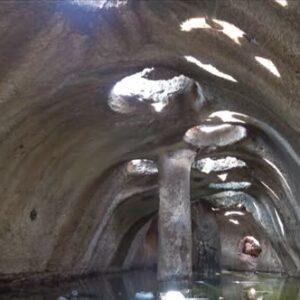
Archaeological excavations beneath St. Peter’s Basilica have revealed an extraordinary underground landscape.
- Ancient Roman roads.
- A remarkably preserved necropolis.
- Family mausoleums.
- Structures dating back to the Roman Empire.
These discoveries demonstrate that the area has been continuously used and rebuilt for nearly two thousand years.
The Vatican Necropolis
One of the most significant archaeological projects beneath the basilica uncovered an extensive cemetery dating to the first centuries AD. These excavations have provided valuable insight into Roman burial customs and early Christian history.
But that’s only part of the story…
Even after decades of research, many sections remain inaccessible simply because excavating beneath an active historic monument is exceptionally difficult.
The Questions Researchers Continue to Explore
Could Unknown Spaces Still Exist?
It is entirely reasonable for archaeologists to acknowledge that undocumented cavities, construction spaces, or sealed rooms may exist beneath a structure built over many centuries.
However, the existence of possible unexplored spaces should not be confused with evidence of a dramatic hidden chamber containing unknown historical revelations.
Why Rumors Spread So Easily
Historic monuments naturally invite speculation.
When restoration work takes place behind closed doors, photographs circulate without context, or old architectural plans resurface online, imaginative interpretations often fill the gaps before verified information becomes available.
Examining the Main Theories
Established Archaeological Evidence
- Multiple underground structures have been scientifically documented.
- The Vatican Necropolis is a well-studied archaeological site.
- Construction beneath the basilica occurred across many historical periods.
Mainstream Historical Interpretation
Historians generally agree that most underground discoveries beneath the basilica fit within known phases of Roman and early Christian development.
Alternative Hypotheses
Some speculate that additional undiscovered chambers may remain hidden. While this is theoretically possible beneath any ancient complex, there is currently no verified evidence supporting sensational claims that such spaces contain history-changing secrets.
Legends and Folklore
Stories of secret vaults, hidden relics, and mysterious passages have surrounded the Vatican for generations. These legends are part of the site’s cultural fascination but should not be treated as established historical fact.
Why the Mystery Still Matters Today
Perhaps the greatest lesson is not whether a hidden chamber exists.
Instead, the enduring fascination reminds us that archaeology is an ongoing process. Every excavation answers old questions while creating entirely new ones.
Modern technologies—including ground-penetrating radar, digital mapping, and advanced imaging—continue helping researchers study fragile historic sites with minimal disturbance.
What happens next may not involve dramatic revelations overnight. Instead, history often advances through careful, patient investigation.
Modern Research and Future Discoveries
Archaeologists continue refining their understanding of the Vatican’s underground landscape using improved documentation techniques and conservation methods.
Future discoveries are certainly possible, but responsible archaeology depends upon verified excavation, peer review, and transparent publication rather than viral headlines.
That distinction is what allows genuine discoveries to reshape history with confidence.
Final Thoughts
The story of hidden spaces beneath St. Peter’s Basilica remains captivating precisely because it blends documented archaeology with centuries of legend.
At present, there is no verified evidence that Pope Leo XIV confirmed a hidden door leading to an unknown chamber beneath the basilica. Nevertheless, the site’s authentic archaeological record is extraordinary enough to inspire wonder without relying on unverified claims.
Sometimes the greatest mysteries are not those invented by rumor—but those patiently uncovered one careful excavation at a time.
What Readers Are Saying
- Michael Turner: “I appreciated how this separated confirmed archaeology from internet speculation.”
- Emily Carter: “The real history turned out to be just as fascinating as the rumors.”
- David Brooks: “This kept me engaged while staying balanced and evidence-based.”
- Sarah Collins: “Now I want to learn more about the Vatican Necropolis.”
- James Wilson: “A refreshing reminder that archaeology relies on evidence, not sensational headlines.”
- Olivia Harris: “Excellent explanation of why these mysteries continue to capture our imagination.”
Frequently Asked Questions
Has Pope Leo XIV confirmed a hidden chamber beneath St. Peter’s Basilica?
There is currently no verified official confirmation supporting that claim.
Are there archaeological structures beneath the basilica?
Yes. Archaeologists have documented an extensive necropolis, Roman remains, and multiple underground structures.
Could undiscovered rooms still exist?
It is possible that undocumented spaces remain, but no evidence currently supports sensational interpretations about their contents.
Why do these stories become so popular?
Ancient monuments naturally inspire curiosity, and incomplete information often encourages speculation online.
Can visitors explore beneath St. Peter’s Basilica?
Some guided visits to portions of the Vatican Necropolis are available, although access is carefully controlled to preserve the archaeological site.