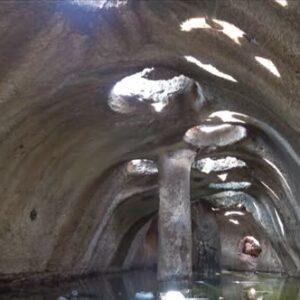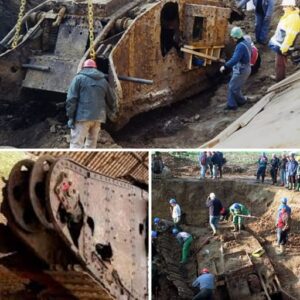
What if some of Egypt’s most remarkable stories were not hidden inside the pyramids, but scattered across silent deserts where entire communities once lived, worshipped, and disappeared? Archaeologists continue to uncover evidence suggesting that many chapters of early Christian Egypt remain buried beneath the sand, waiting to reshape our understanding of history.

The Forgotten World Beyond the Nile
When most people think of ancient Egypt, towering pyramids and royal tombs come to mind. Yet centuries after the age of the pharaohs, another remarkable civilization flourished across the country’s deserts.
Beginning in the third and fourth centuries CE, Christian monks established isolated monasteries, churches, and settlements far from major cities. Some evolved into thriving communities before eventually being abandoned due to changing political, environmental, and economic conditions.

What Archaeologists Have Discovered
Hidden Monasteries Beneath the Sand
Excavations throughout Egypt have uncovered remarkable remains of ancient Christian life, including:
- Stone monasteries built in remote desert valleys.
- Churches decorated with colorful wall paintings.
- Ancient manuscripts written in Coptic and Greek.
- Everyday objects revealing how monks lived, worked, and prayed.
Each discovery adds another piece to a much larger historical puzzle.
Unexpected Preservation
Egypt’s dry climate has helped preserve wooden objects, textiles, manuscripts, and painted plaster that would have deteriorated elsewhere. These finds provide unusually detailed glimpses into daily life nearly two thousand years ago.
Evidence Hidden for Centuries
Researchers combine archaeology, satellite imagery, historical records, and scientific dating methods to reconstruct these forgotten landscapes.
However, many sites remain only partially excavated. Wind-blown sand continues to conceal buildings whose full stories are still unknown.
That uncertainty is precisely what makes ongoing research so compelling.
The Questions Historians Still Can’t Answer
Why Were So Many Communities Abandoned?
Several explanations have been proposed.
- Climate shifts may have reduced access to water.
- Economic changes could have altered trade routes.
- Political transitions affected regional populations.
- Some settlements gradually merged into larger communities.
Evidence suggests that different sites likely experienced different histories rather than one universal cause.
Could More Settlements Still Be Waiting?
Many archaeologists believe the answer is yes. Remote desert regions remain difficult to survey completely, and new technologies continue to identify structures hidden beneath the surface.
Mainstream Research vs. Alternative Ideas
Established archaeological evidence confirms that extensive Christian monastic communities existed across Egypt for centuries.
Some alternative theories suggest that undiscovered networks of settlements were far larger than currently documented. While intriguing, these ideas remain hypotheses until supported by additional archaeological evidence.
Legends describing miraculous events connected to certain monasteries also form an important part of local cultural heritage. These stories are valuable historically and culturally, but they should not be treated as archaeological proof.
Why This Mystery Still Matters Today
Every newly excavated church, manuscript, or monastery expands our understanding of how diverse communities adapted to one of the world’s harshest environments.
These discoveries also remind us that history is rarely complete. Entire chapters of human civilization can remain hidden for centuries before emerging through careful scientific investigation.
Modern Discoveries and New Research
Recent archaeological projects increasingly rely on satellite imaging, ground-penetrating radar, drone mapping, and advanced conservation techniques.
Rather than relying solely on excavation, researchers can now identify promising locations before breaking ground, helping preserve fragile sites while improving the chances of major discoveries.
Even so, countless questions remain unanswered—and that is part of what keeps archaeology so fascinating.
Final Thoughts
The deserts of Egypt still hold remarkable secrets beneath their shifting sands. Each excavation reminds us that history is not a finished book but an ongoing investigation.
As new evidence emerges, our understanding of Egypt’s ancient Christian communities continues to evolve. Some mysteries may eventually be solved, while others will likely inspire generations of researchers to keep searching.
What Readers Are Saying
- Michael Turner: “I never realized Egypt’s Christian history was so rich and mysterious.”
- Emily Carter: “The balance between archaeology and unanswered questions kept me reading.”
- David Brooks: “Now I want to learn more about Coptic history and ancient monasteries.”
- Sophia Reynolds: “The discoveries are fascinating without exaggerating the evidence.”
- James Collins: “It’s amazing how much history is still buried beneath the desert.”
- Rachel Moore: “A thoughtful and engaging look at an overlooked part of Egypt’s past.”
Frequently Asked Questions
Is there archaeological evidence for ancient Christian monasteries in Egypt?
Yes. Numerous excavated monasteries, churches, manuscripts, and artifacts provide strong evidence of thriving Christian communities across Egypt.
Why were many desert settlements abandoned?
Researchers believe the reasons varied, including environmental change, shifting economies, and political developments.
Has modern technology improved archaeological research?
Yes. Satellite imagery, drones, and geophysical surveys help locate and study sites more efficiently while reducing unnecessary excavation.
Why do some mysteries remain unsolved?
Many archaeological sites remain unexplored or only partially excavated, and historical records are often incomplete.
Can visitors see some of these ancient monasteries today?
Yes. Several historic monasteries and archaeological sites in Egypt are open to visitors, although access varies depending on preservation efforts and local regulations.