Some ancient structures seem impossible to explain—even with today’s technology.

Hidden within an ancient wall in Peru lies a remarkable stone whose precise craftsmanship has amazed visitors, archaeologists, and engineers for centuries. Its multiple angles fit so perfectly against neighboring stones that even the thinnest blade of grass struggles to find a gap. How was such precision achieved without mortar, modern machinery, or steel tools?
The answer remains one of archaeology’s most fascinating mysteries.

A Masterpiece Carved in Stone
Deep within the historic city of Cusco, once the heart of the Inca world, stands a wall that has become famous across the globe.
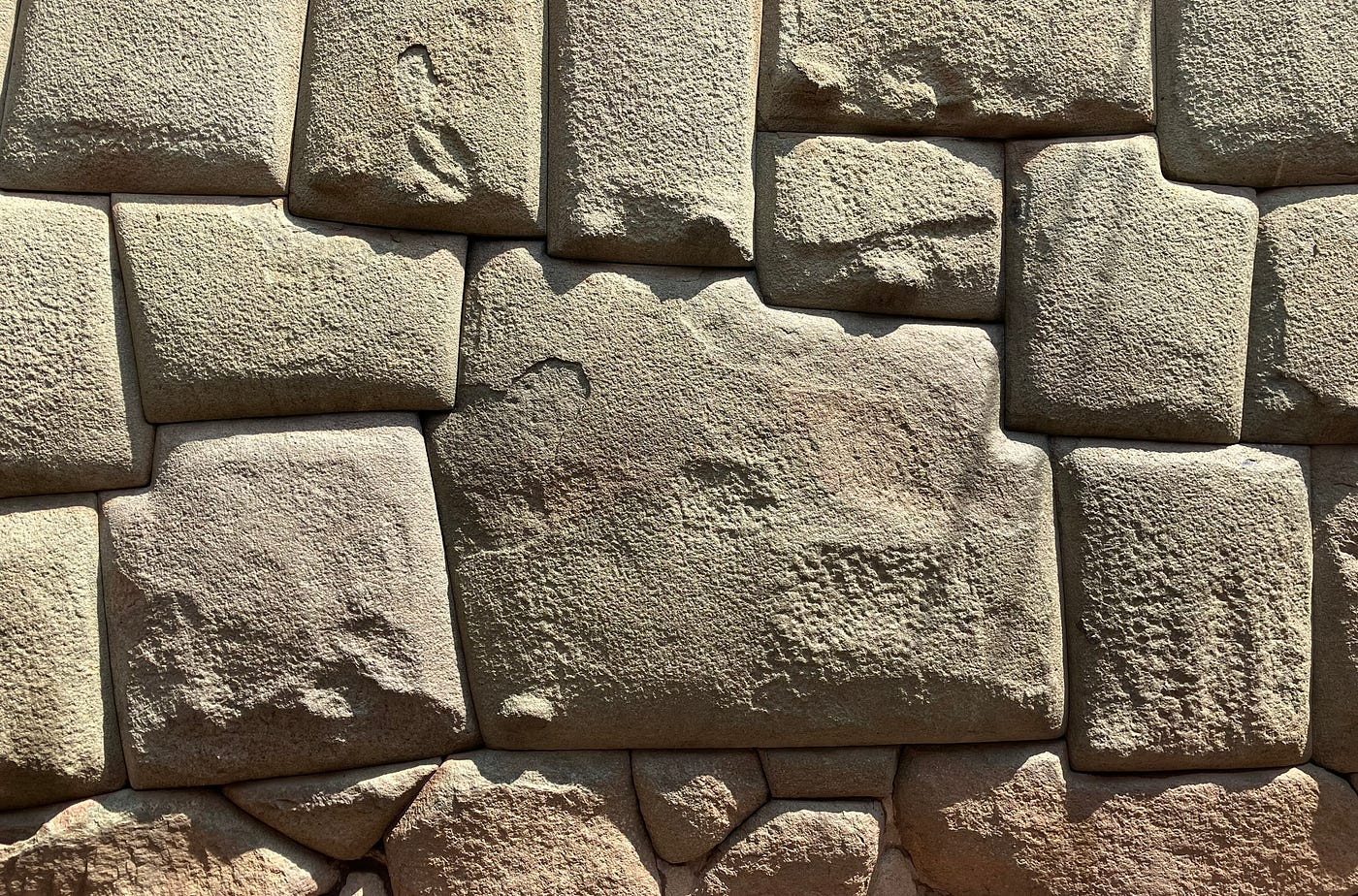
Among its carefully shaped stones is a particularly extraordinary example often referred to as the Twelve-Angled Stone. Its many edges interlock seamlessly with the surrounding blocks, creating a level of precision that continues to impress even modern builders.
What makes this achievement even more remarkable is that the structure was built without mortar. The stones support one another through their exact shapes and placement alone.
At first glance, it appears simple. But the longer one studies it, the more questions emerge.
What Archaeologists Know

Archaeologists generally agree that the wall was constructed during the Inca period, although some foundations in the region may incorporate even older building traditions.
The Incas were renowned for their stoneworking skills and developed sophisticated construction techniques that helped their buildings withstand earthquakes.
Established evidence suggests several key facts:
- The stones were carefully shaped by hand.
- No mortar was used between the blocks.
- The wall has survived centuries of seismic activity.
- The stonework demonstrates exceptional planning and craftsmanship.
These facts are well supported by archaeological research. Yet understanding exactly how such precision was consistently achieved remains more difficult.
Engineering Beyond Its Time?
The most striking feature of the stone is its intricate geometry.
Rather than using simple rectangular blocks, ancient craftsmen created stones with numerous angles that lock together like pieces of an enormous puzzle.
Why choose such a difficult approach?
One explanation is structural stability. Multiple contact points may have helped distribute forces during earthquakes, allowing walls to shift slightly without collapsing.
But that’s only part of the story.
The extraordinary accuracy of the joints raises another question: how did builders repeatedly create stones that fit so perfectly?
Theories Behind the Precision
The Mainstream Archaeological View
Most researchers believe skilled workers shaped stones through a lengthy process of carving, testing, adjusting, and refining.
Using stone hammers and abrasive materials, craftsmen could gradually remove tiny amounts of material until neighboring stones matched almost perfectly.
This interpretation is supported by archaeological evidence showing the use of stone tools and extensive labor organization within the Inca Empire.
Lost Construction Techniques
Some researchers suggest that specialized methods may have existed that are no longer fully understood today.
These techniques may have included sophisticated measuring systems, templates, or construction practices passed down through generations of master builders.
While plausible, direct evidence for every aspect of these methods remains limited.
Alternative Hypotheses
Over the years, more controversial theories have emerged.
Some have proposed unknown technologies or forgotten engineering secrets. Others speculate about advanced knowledge lost to history.
However, such ideas remain hypotheses rather than established facts. Archaeologists generally emphasize evidence-based explanations rooted in known ancient craftsmanship.
Still, the remarkable precision keeps these debates alive.
Evidence Hidden Within the Wall
One reason the mystery continues is the wall’s incredible durability.
Numerous earthquakes have struck the region over the centuries, yet many sections of the ancient stonework remain standing.
Meanwhile, some later colonial structures built with mortar suffered far greater damage.
This resilience suggests the builders understood structural principles at an advanced level.
Whether through experience, experimentation, or generations of accumulated knowledge, they created something that continues to outperform expectations.
And then archaeologists noticed something else.
The precision is not limited to a single stone. Similar examples appear throughout ancient Inca sites, indicating that this was part of a broader architectural tradition rather than an isolated achievement.
Why the Mystery Still Matters Today
The fascination surrounding this stone extends far beyond archaeology.
It challenges common assumptions about ancient societies and reminds us that technological sophistication does not always require modern machinery.
The wall demonstrates that human ingenuity can achieve extraordinary results using seemingly simple tools.
It also raises an important question:
How many ancient techniques have been lost because the knowledge was never written down?
That question continues to inspire researchers around the world.
Modern Discoveries and New Research
Advances in digital scanning, 3D modeling, and structural analysis are providing fresh insights into ancient stonework.
Researchers can now examine surface details and construction patterns with unprecedented accuracy.
These technologies help scientists better understand how stones were shaped, transported, and assembled.
Yet despite these advances, no single discovery has completely solved the mystery.
The craftsmanship remains extraordinary. The methods remain partially hidden.
And the debate continues.
Final Thoughts
The famous multi-angled stone of Peru stands as one of the most impressive examples of ancient engineering ever created.
Archaeologists have uncovered important clues about its origins and construction, but certain aspects of its precision still inspire wonder.
Whether viewed as a triumph of human craftsmanship, a testament to lost building traditions, or an enduring archaeological puzzle, it continues to capture the imagination of everyone who sees it.
Centuries after its creation, one thing is certain: the stone still has stories left to tell.
What Readers Are Saying
- Michael Turner: “I’ve read about this stone before, but this explanation made me appreciate the engineering behind it even more.”
- Emily Carter: “It’s amazing that ancient builders achieved such precision without modern equipment.”
- David Brooks: “The earthquake resistance aspect completely surprised me.”
- Sarah Mitchell: “Stories like this remind us how much history still has to teach us.”
- James Walker: “I never realized archaeologists were still debating aspects of its construction.”
- Olivia Harris: “The balance between evidence and mystery was fascinating.”
- Ryan Foster: “Now I want to learn more about Inca architecture.”
- Jessica Reed: “One of the most intriguing archaeological mysteries I’ve encountered.”
Frequently Asked Questions
Is the stone really that precisely fitted?
Yes. The stone is famous for its exceptionally tight joints, which demonstrate remarkable craftsmanship and precision.
Did the builders use mortar?
No. The stones were fitted together without mortar, relying on their carefully shaped surfaces for stability.
What do archaeologists believe today?
Most archaeologists attribute the achievement to highly skilled craftsmanship, extensive labor, and sophisticated stoneworking techniques.
Why is the structure considered mysterious?
While the general construction methods are understood, the exact processes used to achieve such consistent precision remain a subject of ongoing study.
Has modern technology helped researchers understand it better?
Yes. Tools such as 3D scanning and digital modeling provide new insights into construction techniques and structural design.
Can visitors see the stone today?
Yes. The famous stone remains a major attraction in Cusco, Peru, where visitors can observe its extraordinary craftsmanship firsthand.