Some ancient structures seem almost impossible to explain—even with modern engineering. The Great Pyramids have stood for more than 4,500 years, yet the closer researchers look, the more complex the story becomes. And that may be the biggest surprise of all.

For generations, many people imagined vast armies of enslaved workers dragging enormous stone blocks across the desert. Today, archaeology paints a far more detailed and fascinating picture. But even with decades of research, several remarkable questions remain unanswered.

One of Humanity’s Greatest Engineering Achievements
The pyramids on the Giza Plateau remain among the most recognizable monuments ever created. Built during Egypt’s Fourth Dynasty, the Great Pyramid of Pharaoh Khufu originally stood about 146 meters tall and consisted of an estimated 2.3 million stone blocks.
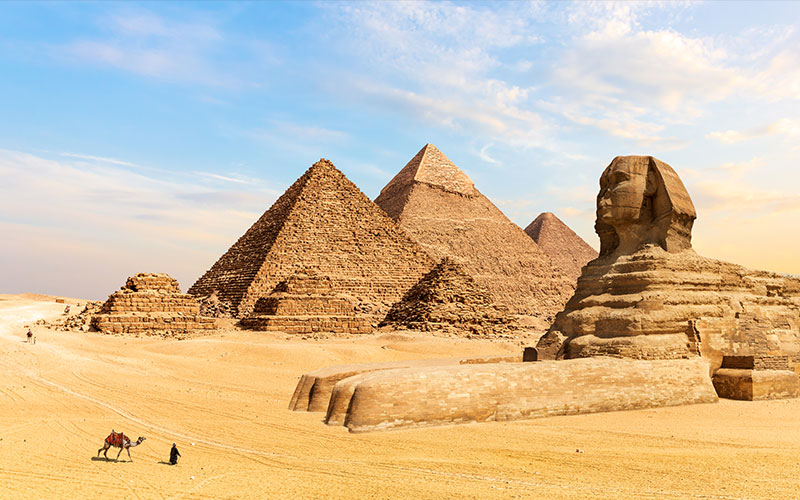
Its extraordinary alignment with the cardinal directions, precise construction, and immense scale continue to inspire admiration from historians, engineers, and archaeologists alike.
More Than Giant Tombs
Although the pyramids served as royal tombs, they also reflected the political organization, engineering knowledge, and economic strength of Ancient Egypt. Building them required planning on an astonishing scale rather than a single technological breakthrough.
- Carefully organized labor forces
- Extensive food and supply networks
- Skilled stoneworkers and surveyors
- Advanced knowledge of mathematics and geometry
- Years of coordinated construction
Yet that is only the beginning of the story.
What Archaeologists Know Today
Evidence Hidden Beneath the Sand
Modern excavations have transformed our understanding of pyramid construction. Archaeologists have uncovered workers’ villages, bakeries, medical facilities, administrative buildings, and cemeteries near Giza.
These discoveries suggest that many laborers were skilled workers who received food, medical care, and organized housing instead of being treated simply as enslaved labor.
An Unexpected Discovery in Ancient Records
One of the most significant finds came from ancient papyri discovered near the Red Sea. These records describe officials overseeing the transportation of limestone by boat through canals connected to the Nile.
The documents provide valuable evidence that waterways played a major role in moving massive building materials closer to the construction site.
But transporting the stones was only one challenge. Raising them into position remains an active area of research.
Engineering Beyond Its Time?
Exactly how millions of heavy blocks reached their final positions continues to generate debate among specialists. Rather than one universal solution, researchers increasingly believe different methods may have been used during various construction phases.
The Traditional Ramp Theory
The most widely accepted explanation proposes that workers used large earthen ramps combined with sledges and teams of laborers.
Experiments have shown that slightly wetting sand can reduce friction, making it easier to pull heavy loads. This finding supports the idea that relatively simple techniques, applied with exceptional organization, could accomplish extraordinary tasks.
Internal Ramp Hypothesis
Some researchers have suggested that portions of the pyramid may have been built using ramps hidden inside the structure itself. This hypothesis attempts to explain how higher levels could have been completed without constructing impossibly large external ramps.
However, definitive archaeological evidence confirming this idea has not yet been found.
Multiple Ramp Systems
Another interpretation proposes that builders combined straight ramps, zigzag ramps, spiral ramps, and temporary lifting methods depending on each stage of construction.
Many Egyptologists consider this flexible approach more realistic than relying on a single technique throughout the entire project.
Even so, researchers continue searching for stronger evidence.
The Questions Historians Still Can’t Fully Answer
While modern archaeology has solved many longstanding mysteries, several fascinating puzzles remain.
- How were construction schedules managed with remarkable precision?
- What surveying techniques produced such accurate alignment?
- Were specialized lifting devices used for the upper courses?
- How did engineers coordinate thousands of workers over decades?
These questions do not suggest the pyramids required impossible technology. Instead, they highlight just how sophisticated Ancient Egyptian engineering truly was.
Separating Evidence from Speculation
Established Archaeological Evidence
- Workers’ settlements have been excavated.
- Ancient administrative records document stone transportation.
- Quarries supplying construction materials have been identified.
- Experimental archaeology demonstrates several feasible construction methods.
Mainstream Historical Interpretation
Most specialists conclude that the pyramids were built by highly organized Egyptian labor forces using techniques available during the Old Kingdom. Their success resulted from remarkable planning, engineering, and manpower rather than mysterious lost technologies.
Alternative Hypotheses
Various alternative theories propose unknown technologies or outside influences. While these ideas attract considerable public interest, they currently lack convincing archaeological evidence accepted by the majority of researchers.
This distinction remains essential when evaluating extraordinary claims.
Why the Mystery Still Matters Today
The enduring fascination with the pyramids is not simply about massive stones. It is about understanding what ancient societies could accomplish through knowledge, organization, and determination.
Every new discovery reminds us that history is rarely as simple as textbook summaries suggest. Scientific investigation continues refining our understanding instead of replacing one certainty with another.
Perhaps the greatest lesson is that the ancient world was often far more innovative than modern people once believed.
Modern Discoveries Continue to Change the Story
Advanced technologies including laser scanning, satellite imaging, ground-penetrating radar, and muon detection are allowing researchers to study the pyramids without damaging them.
Some investigations have revealed previously unknown internal voids, while ongoing surveys continue searching for clues about construction methods and hidden architectural features.
Each discovery answers one question—but often raises several more.
Final Thoughts
The story of the pyramids is no longer simply one of mystery or myth. It is an evolving scientific investigation shaped by archaeology, engineering, and careful analysis of new evidence.
Although many details remain uncertain, the growing body of research points toward an extraordinary achievement built through human ingenuity rather than supernatural explanations.
Yet one question still remains. As technology reveals more secrets hidden within these ancient monuments, what remarkable discoveries might still be waiting beneath the stones?
What Readers Are Saying
- Michael Turner: “I’ve read about the pyramids for years, but this explained the evidence in a way that kept me hooked.”
- Emily Carter: “I love how the article separates facts from speculation without making the mystery disappear.”
- David Brooks: “The engineering behind these monuments is even more impressive than I imagined.”
- Sarah Mitchell: “Now I understand why archaeologists are still studying these incredible structures.”
- James Wilson: “Balanced, fascinating, and full of surprising discoveries.”
- Olivia Harris: “The gradual reveal made it impossible to stop reading.”
- Daniel Cooper: “It’s amazing how much modern technology is changing our understanding of ancient history.”
Frequently Asked Questions
Did enslaved people build the pyramids?
Current archaeological evidence suggests that many builders were organized laborers and skilled workers supported by the Egyptian state, rather than large populations of enslaved people.
How were the massive stones transported?
Evidence indicates that boats, canals, sledges, and carefully prepared pathways were likely used to move many of the stones efficiently.
Do archaeologists agree on exactly how the pyramids were built?
No. While there is broad agreement on many aspects of construction, researchers continue debating the precise methods used to raise stones to the highest levels.
Has modern technology revealed anything new?
Yes. Non-invasive scanning methods have identified previously unknown internal spaces and continue providing valuable information without damaging the monuments.
Can visitors explore the pyramids today?
Yes. Tourists can visit the Giza Plateau, and some pyramid interiors are open to visitors depending on conservation efforts and local regulations.