For decades, scientists believed they had a fairly clear picture of how early humans evolved and spread across the world. Then an extraordinary fossil emerged from the ground, raising new questions that continue to challenge long-held assumptions.

At first glance, it looked like another ancient skull. But as researchers examined it more closely, they realized they were looking at one of the most complete early human fossils ever discovered. The implications would reach far beyond a single archaeological site.
A Discovery That Rewrote Expectations
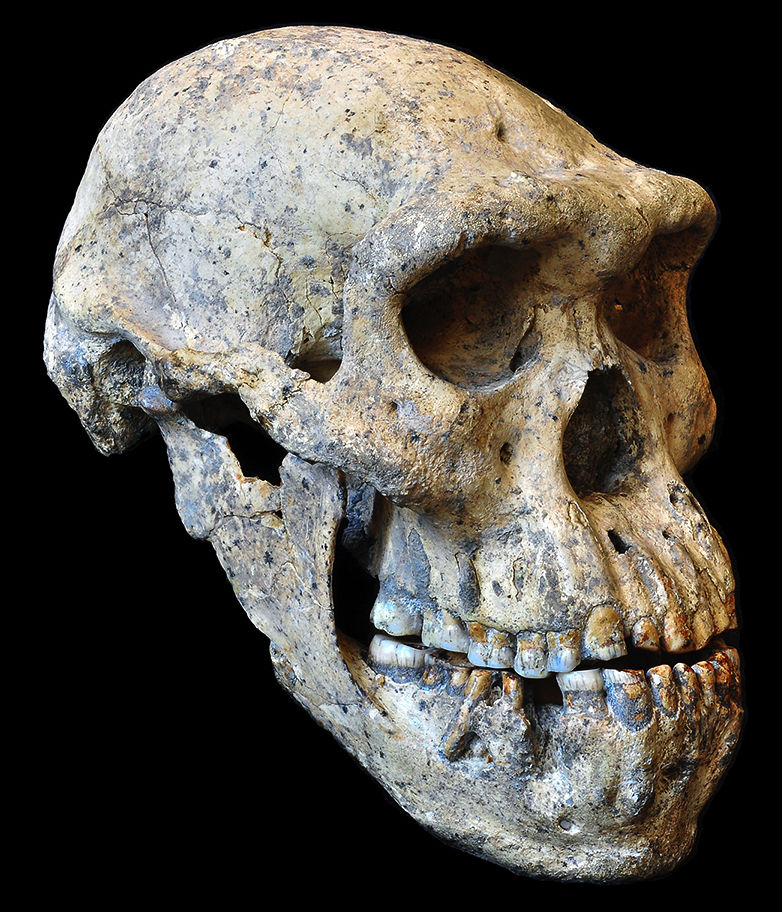
The Dmanisi skull, commonly known as Skull 5 or D4500, was uncovered at the archaeological site of Dmanisi in present-day Georgia. Estimated to be approximately 1.8 million years old, it is the most complete skull ever found from a Pleistocene member of the genus Homo of comparable age.
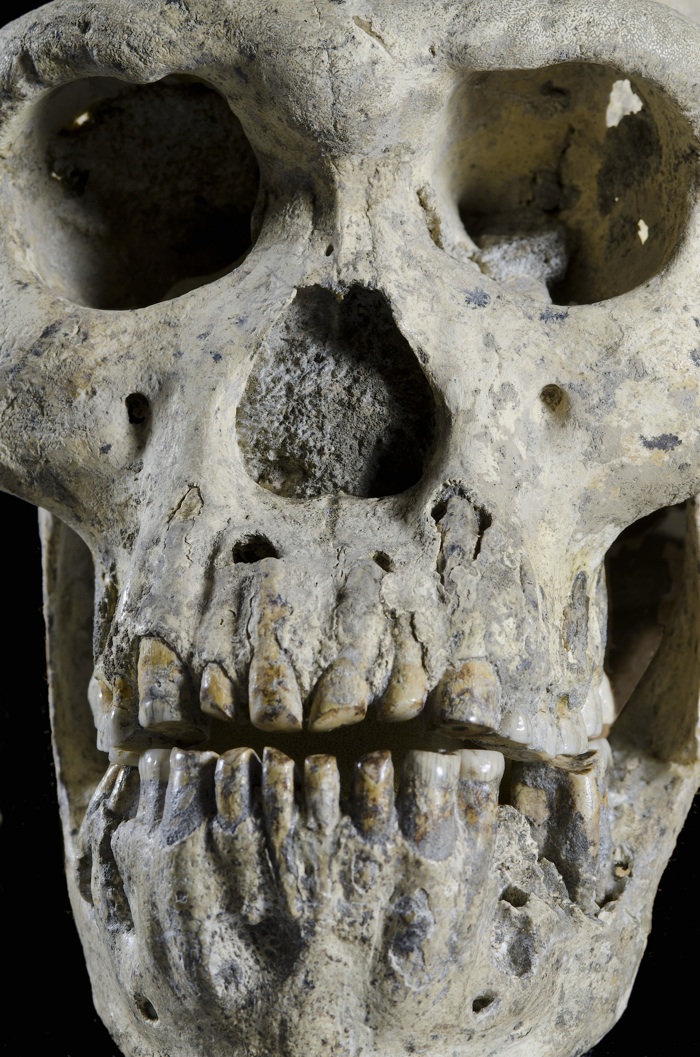
The fossil belongs to a remarkable collection of five ancient skulls discovered at the same site. Together, these finds provide an exceptionally rare opportunity to study variation within one of the earliest human populations known outside Africa.
What Archaeologists Know Today
An Extraordinary Archaeological Site
Dmanisi has become one of the world’s most significant paleoanthropological sites. Alongside human fossils, archaeologists uncovered simple stone tools and numerous animal remains, painting a vivid picture of life nearly two million years ago.
The evidence strongly suggests that early members of the genus Homo had already expanded beyond Africa much earlier than many researchers once believed.
Why Skull 5 Stands Out
Unlike many fossil discoveries, Skull 5 includes both an exceptionally complete cranium and a well-preserved lower jaw. This completeness allows scientists to study facial structure, brain size, jaw anatomy, and other features together rather than relying on isolated fragments.
That level of preservation makes comparisons between ancient human populations far more reliable.
The Questions Scientists Continue to Debate
But the discovery introduced an unexpected challenge.
The five skulls from Dmanisi display surprisingly wide physical differences despite being found together in the same place and from roughly the same period.
Could individuals from a single population really vary this much?
That question sparked one of the most fascinating debates in human evolution research.
The Mainstream Interpretation
Many paleoanthropologists argue that the variation seen among the Dmanisi fossils falls within the normal range expected for a single species of early Homo erectus. Differences may reflect age, sex, and natural biological diversity, much as modern humans vary in appearance.
If this interpretation is correct, several fossils previously classified as separate early human species elsewhere might instead represent normal variation within fewer species.
Alternative Scientific Interpretations
Some researchers remain cautious. They suggest that the observed differences could indicate multiple closely related human groups rather than a single population.
These interpretations remain scientific hypotheses rather than established conclusions. Ongoing discoveries and new analytical methods continue to refine the discussion.
Evidence Behind the Competing Ideas
Evidence Supporting a Single Species
- All five skulls were discovered at the same archaeological site.
- They appear to date to approximately the same time period.
- The fossils share numerous key anatomical characteristics despite their differences.
- Variation resembles diversity observed within living human populations and other primates.
Evidence Supporting Continued Debate
- Some skulls differ noticeably in facial proportions and cranial shape.
- Brain sizes vary considerably among the individuals.
- Other early Homo fossils discovered in Africa show similar diversity that some researchers interpret differently.
The scientific conversation continues because both interpretations rely on legitimate observations from the available evidence.
Why This Discovery Still Matters
The importance of the Dmanisi skull extends well beyond one fossil.
It has influenced how scientists think about early human migration, adaptation, and biological diversity during one of the most important periods in human evolution.
If early human populations were more variable than previously assumed, the evolutionary tree may be less fragmented than older models suggested.
Yet one question still remains: how much variation is enough to define a different species?
Modern Research Continues to Reveal New Insights
Advances in high-resolution CT scanning, digital reconstruction, and three-dimensional morphometric analysis have allowed researchers to examine Skull 5 in remarkable detail without damaging the fossil.
These technologies continue to improve scientists’ understanding of skull development, biomechanics, and evolutionary relationships.
Meanwhile, new fossil discoveries across Africa and Eurasia provide additional evidence that helps place the Dmanisi individuals within the broader story of human evolution.
Each new discovery adds another piece to a puzzle that is still far from complete.
Final Thoughts
The Dmanisi skull remains one of the most influential fossil discoveries in paleoanthropology. Rather than providing every answer, it has encouraged scientists to ask better questions about our earliest ancestors.
Its exceptional preservation, great antiquity, and scientific significance continue to reshape discussions about how early humans evolved and spread beyond Africa. Even after decades of research, this remarkable fossil reminds us that the story of human origins is still unfolding.
What Readers Are Saying
- Michael Turner: “I’ve read about early humans before, but this explained the importance of the discovery in a fascinating way.”
- Emily Carter: “It’s amazing that one fossil can reshape scientific thinking.”
- David Brooks: “The balance between evidence and mystery kept me reading until the end.”
- Sarah Collins: “Now I understand why Dmanisi is considered such an important archaeological site.”
- James Wilson: “Excellent explanation without exaggerating the science.”
- Rachel Morgan: “Human evolution becomes much more interesting when you see how discoveries change our understanding.”
Frequently Asked Questions
How old is the Dmanisi skull?
The fossil is estimated to be about 1.8 million years old, making it one of the oldest and most complete early human skulls ever discovered.
Why is Skull 5 considered so important?
Its exceptional completeness allows researchers to study the anatomy of an early human in far greater detail than many fragmentary fossils.
What do most archaeologists believe today?
Many researchers interpret the Dmanisi fossils as representing natural variation within an early Homo erectus population, although scientific discussion continues.
Has modern technology improved our understanding of the fossil?
Yes. Advanced imaging techniques and digital modeling have revealed new anatomical details while preserving the original fossil.
Can visitors see the Dmanisi archaeological site?
Yes. The archaeological site and associated museum in Georgia provide opportunities to learn about one of the world’s most important early human discoveries.