What can a tiny piece of jewelry reveal about an entire world? Sometimes, one beautifully crafted object can uncover stories of trade, culture, and human connections stretching thousands of kilometers across ancient Asia.
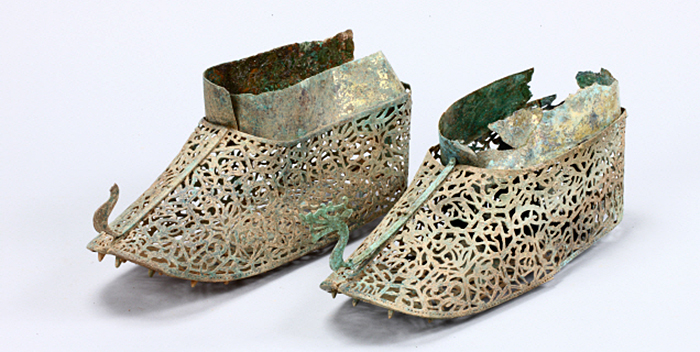
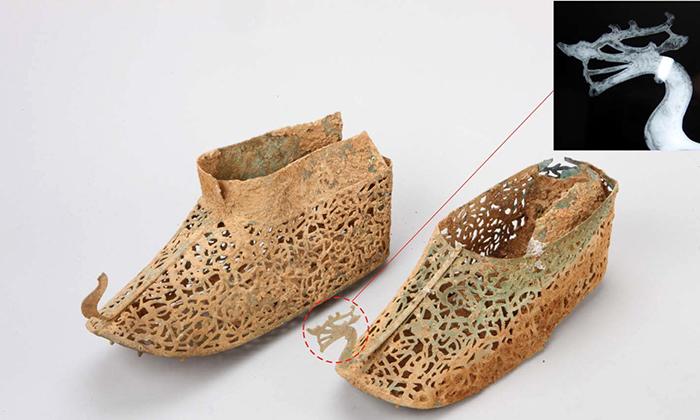
At first glance, this remarkable gold and jade shoe ornament appears to be little more than an elegant decoration. But as archaeologists examined its craftsmanship and materials, a far more intriguing picture began to emerge. And that is only the beginning of its story.

A Remarkable Discovery in an Extraordinary Burial
The ornament was discovered at Tillya Tepe, an archaeological site in modern Afghanistan famous for its exceptionally rich burials dating to the first century AD. The site yielded thousands of exquisite gold objects that demonstrated the wealth and sophistication of the individuals buried there.

Among these treasures was a finely crafted shoe ornament made of gold and jade. Although relatively small, it immediately attracted attention because its artistic style appeared to reflect influences extending well beyond the region where it was found.
More Than Personal Decoration
Shoe ornaments were more than fashionable accessories. In many ancient societies, elaborate clothing and footwear signaled status, identity, and sometimes political authority.
The use of gold emphasized prestige, while jade carried deep cultural significance across parts of East Asia, making the combination especially fascinating to researchers.
What Archaeologists Know Today
Careful study suggests that the ornament may not have been produced locally. Based on artistic features and material comparisons, some specialists believe it may have originated in Mongolia or China before eventually reaching Tillya Tepe.
This interpretation fits well with growing archaeological evidence showing that long-distance exchange networks connected Central Asia with East Asia long before the medieval Silk Road reached its peak.
Evidence Supporting Current Research
- Exceptional gold craftsmanship consistent with high-status luxury goods.
- The presence of jade, a material highly valued in East Asia.
- Artistic elements comparable to objects found farther east.
- The multicultural nature of other artifacts discovered within the same burial complex.
None of these clues alone proves where the ornament was created. Together, however, they paint a compelling picture of extensive cultural interaction.
Theories Behind Its Origin
This is where the mystery becomes even more interesting.
The East Asian Workshop Hypothesis
One leading interpretation proposes that skilled artisans in Mongolia or China produced the ornament before it traveled west through trade, diplomacy, or elite exchange.
If correct, the object demonstrates just how interconnected ancient societies had already become.
A Central Asian Masterpiece Inspired by Foreign Styles
Another possibility is that local craftsmen created the ornament while incorporating artistic traditions from neighboring cultures.
Archaeologists have documented many examples of artistic blending throughout ancient Central Asia, where merchants, travelers, and nomadic peoples frequently interacted.
Could It Have Been a Diplomatic Gift?
Some researchers have suggested that luxury objects such as this may have circulated as prestigious gifts exchanged between influential families or regional rulers.
While direct evidence remains limited, similar practices are well documented across numerous ancient civilizations.
Where Evidence Ends and Speculation Begins
Established archaeological evidence confirms the ornament was discovered in a high-status burial at Tillya Tepe and that it is made of gold and jade.
The suggestion that it originated in Mongolia or China remains a well-supported hypothesis rather than an established fact.
Legends or dramatic claims about hidden empires or forgotten civilizations are not supported by the available archaeological evidence related to this artifact.
Why This Small Object Still Matters
It is easy to focus on monumental temples or towering statues, but sometimes the smallest discoveries reshape our understanding of history.
This ornament reminds us that ideas, materials, artistic styles, and luxury goods traveled enormous distances. Ancient societies were often far more connected than many people imagine.
Each carefully studied artifact adds another piece to the enormous puzzle of human history.
Modern Research Continues the Investigation
Advances in scientific analysis continue to improve researchers’ understanding of ancient artifacts.
Techniques such as microscopic examination, metallurgical analysis, and comparative stylistic research help specialists trace manufacturing methods and identify possible cultural influences.
Future discoveries from Central Asia may provide additional evidence that either strengthens current interpretations or introduces entirely new possibilities.
Yet one question still remains: exactly who wore this remarkable ornament, and what journey brought it to Tillya Tepe?
What Readers Are Saying
- Michael Turner: “I never imagined such a small object could reveal so much about ancient trade.”
- Emily Carter: “The balance between evidence and mystery made this incredibly enjoyable to read.”
- David Brooks: “Now I want to learn much more about Tillya Tepe and Central Asian archaeology.”
- Sophia Evans: “The gradual reveal kept me interested all the way through.”
- James Walker: “It’s fascinating to see how archaeology pieces together stories from tiny artifacts.”
- Olivia Bennett: “Excellent explanation without exaggerating the unknowns.”
Frequently Asked Questions
Is the shoe ornament definitely from China or Mongolia?
No. Archaeologists consider this a plausible hypothesis based on style and materials, but its precise place of manufacture has not been conclusively established.
Why is jade significant?
Jade was highly valued across many East Asian cultures and often symbolized prestige, craftsmanship, and cultural importance.
Why was the ornament buried with its owner?
High-status burials frequently included valuable personal possessions, reflecting social standing, wealth, or cultural traditions surrounding death.
What makes Tillya Tepe so important?
The site contains one of the most spectacular collections of ancient gold artifacts ever discovered, offering exceptional insight into cultural exchange across Central Asia.
Has modern technology improved our understanding of these artifacts?
Yes. Scientific analysis continues to refine knowledge about manufacturing techniques, materials, and possible trade connections, helping archaeologists build increasingly detailed interpretations.
Final Thoughts
Some archaeological discoveries transform history through sheer size. Others achieve the same impact through remarkable detail.
This elegant gold and jade shoe ornament belongs to the second category. Although small enough to fit comfortably in a hand, it opens an extraordinary window into a world where merchants, artisans, travelers, and ideas crossed continents long before modern borders existed. Its full journey may never be completely known, but its story continues to inspire new questions—and that is exactly what makes archaeology so captivating.